
Galvanized vs PEX vs Copper: The Right Pipe for Your Repipe
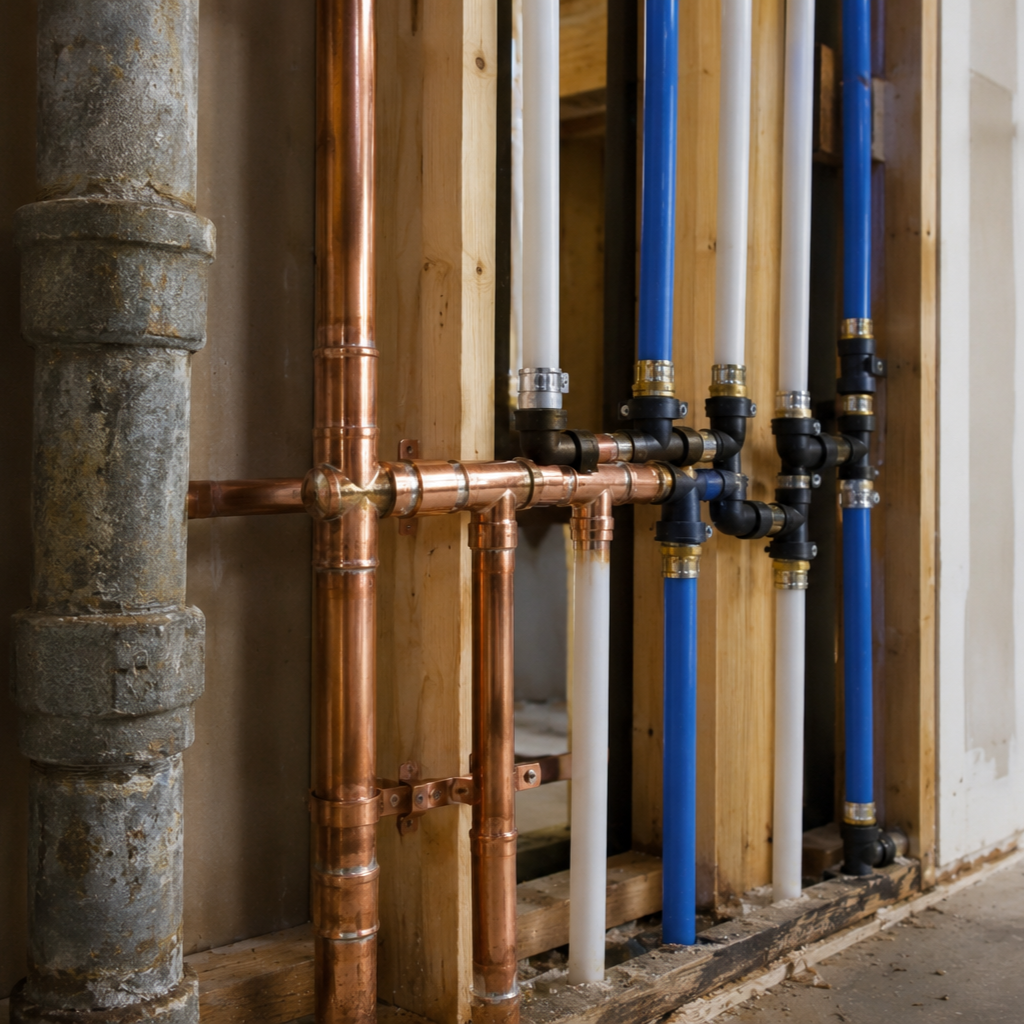
Quick Answer: Galvanized steel is the old material you're usually replacing in a repipe — it corrodes and clogs from the inside over decades, so it's not a choice for new work. The real decision is PEX versus copper. PEX is a flexible plastic piping that's lower-cost, fast to install, resistant to corrosion, and handles freezing better; copper is a rigid metal that's long-proven, durable, and heat-tolerant but costs more and takes longer to install. Both are excellent modern choices. PEX often wins on cost, speed, and freeze resistance; copper appeals to those wanting a traditional, time-tested metal pipe.
When you repipe a home, you're not just replacing pipes — you're choosing what to replace them with, and that choice lasts for decades. Three materials come up in the conversation: galvanized steel, PEX, and copper. The first is usually what's coming out; the real decision is between the latter two. Understanding how they differ in durability, cost, and performance helps you pick the right material for your home and your situation, especially in a climate with hard winters.
Galvanized Is What You're Replacing
Start with galvanized steel, because it frames the whole decision. Galvanized pipe was widely used in older homes, but it corrodes and accumulates mineral deposits inside over decades, which narrows the pipe, restricts flow, discolors the water, and eventually causes leaks. It's the material most repipes are replacing, not one you'd choose for new work. So if your home has galvanized pipes, the question isn't whether to keep them — it's which modern material to replace them with. That brings the real choice down to PEX versus copper, the two materials worth actually comparing.
PEX: Flexible, Affordable, Freeze-Friendly
PEX is a flexible plastic piping that has become a leading choice for repipes. Its advantages are practical. It's generally lower in cost than copper, both for the material and the labor, because its flexibility lets it be installed faster and with fewer fittings — often allowing a whole-home repipe to be completed quickly. It resists corrosion and the mineral buildup that plagues metal pipes, and it handles freezing better than rigid pipe, since it can expand somewhat rather than bursting as readily — a real consideration in cold-winter regions. PEX is also quieter and easier to route through existing walls. For many homeowners, PEX offers excellent performance at a lower cost and with less disruptive installation, which is a big part of why it has become the default choice for whole-home repipes.
Copper: Proven, Durable, Traditional
Copper is the long-established metal piping that's been trusted for generations. Its strengths are durability and a long track record: it's strong, long-lasting, heat-tolerant, and a proven material many people trust. Some homeowners simply prefer a traditional metal pipe. The trade-offs are cost and installation — copper is more expensive than PEX in both material and labor, and because it's rigid and joined by soldering, it takes longer to install. Copper is an excellent, durable choice; it just comes at a higher price and a longer installation time than PEX.
| Factor | Galvanized (old) | PEX | Copper |
|---|---|---|---|
| Status | Being replaced | Modern choice | Modern choice |
| Cost | — | Lower | Higher |
| Installation | — | Fast, flexible | Slower, rigid, soldered |
| Corrosion resistance | Poor (corrodes) | Excellent | Good |
| Freeze tolerance | Poor | Better (can expand) | Less forgiving |
| Track record | Outdated | Widely proven | Long-proven |
How to Choose Between PEX and Copper
Both PEX and copper are excellent modern materials, so the choice comes down to your priorities. PEX tends to win when cost, installation speed, corrosion resistance, and freeze tolerance matter most — which is why it's so popular for whole-home repipes, especially in cold climates where its freeze behavior is an advantage. Copper appeals when you want a traditional, time-tested metal pipe with a long durability record and don't mind paying more for it. There's no wrong answer between the two; it's about what you value. A licensed plumber can walk you through how each fits your home, budget, and timeline and make a recommendation, but the key takeaway is that you're upgrading from failing galvanized to a modern material that will serve the home far better either way.
If your repipe is driven partly by cold-winter concerns, PEX's ability to flex rather than burst as readily when water freezes is a point in its favor. It's not freeze-proof, but its behavior under freezing is one reason many cold-climate repipes go with PEX.
Frequently Asked Questions
Both are excellent modern materials, so it depends on your priorities. PEX is lower-cost, faster to install, corrosion-resistant, and handles freezing better, which makes it popular for whole-home repipes, especially in cold climates. Copper is a long-proven, durable metal that tolerates heat well and appeals to those who want a traditional pipe, but it costs more and takes longer to install. There's no wrong choice between them; a plumber can recommend the best fit for your home, budget, and timeline.
Galvanized steel pipe, common in older homes, corrodes and builds up mineral deposits on the inside over decades. That narrows the pipe, restricts water flow, causes discolored and metallic-tasting water, and eventually leads to leaks. Because it deteriorates from the inside and reaches the end of its life, it's the material most repipes are replacing rather than one chosen for new work. If your home has galvanized pipes, the goal is to replace them with a modern material like PEX or copper.
Yes, PEX is an excellent piping material, not a budget compromise. It resists corrosion and mineral buildup, handles freezing better than rigid pipe, installs faster and at lower cost, and performs reliably. Copper is also excellent, with a longer track record and high durability. They're both strong modern choices with different strengths — PEX for cost, speed, and freeze tolerance; copper for its long-proven durability. The right one depends on your priorities rather than one being clearly superior.
It tends to, which matters in cold-winter regions. PEX is flexible and can expand somewhat as water freezes, making it less prone to bursting than rigid pipe under the same conditions. Copper is more rigid and less forgiving when water inside it freezes. PEX isn't freeze-proof — pipes in unheated, exposed spaces still need protection — but its behavior under freezing is one reason many cold-climate repipes choose it. It's a genuine advantage where hard freezes occur.
It can be, depending on what you value. Copper costs more than PEX in both material and labor and takes longer to install because it's rigid and soldered, but it offers a long-proven track record, strong durability, and heat tolerance, and some homeowners prefer a traditional metal pipe. If those qualities matter to you and the higher cost fits your budget, copper is an excellent, lasting choice. If cost, speed, and freeze tolerance matter most, PEX delivers excellent performance at a lower cost.
Replace the Old, Choose the Right New
In a repipe, galvanized steel is what you're getting rid of — an outdated material that corrodes and clogs from the inside. The real choice is PEX versus copper, and both are excellent. PEX wins on cost, installation speed, corrosion resistance, and freeze tolerance, which makes it especially appealing in cold-winter regions; copper offers a long-proven, durable metal pipe for those who want it and will pay more. Either way, you're upgrading to a modern material that serves the home far better than failing galvanized. Match the choice to your priorities, and the repipe sets the plumbing up for decades. Whichever modern material you choose, the biggest improvement is simply getting the old, corroding galvanized out of the walls and replacing it with pipe that won't rust shut, discolor your water, or leak on a schedule.
Planning a repipe and weighing PEX vs copper? — Get expert guidance and quality repiping from a licensed master plumber. East Coast Plumbing serves Barto, Boyertown, Pottstown. Call (610) 944-2998.
