
Your basement makes a particular sound in April that you don't even notice anymore. The pump kicks on, water rushes through the discharge pipe, it shuts off — and three minutes later, same cycle. You've tuned it out. But one night you're down there for something else and you actually stop and listen, and the question finally forms: how old is that pump, anyway?
Most people don't know. They find out it's failed at the worst possible moment — during the storm that put six inches in the sump pit overnight.
How long a sump pump actually lasts
The honest answer is 7 to 10 years for most residential units. That's the range where the majority of pumps — properly installed, reasonably maintained — stop being reliable and start being a gamble.
A cheap plastic-bodied pump installed without attention to check valve placement or discharge run length might fail in three years. A cast-iron submersible from a quality brand, professionally installed and tested annually, can push past 15. The average is what it is because there's a lot of variation on either side.
| Pump Type | Typical Lifespan |
|---|---|
| Submersible — cast iron housing | 7–12 years |
| Submersible — plastic housing | 5–8 years |
| Pedestal | 10–15 years |
| Battery backup unit | 3–5 years (battery); pump unit lasts longer |
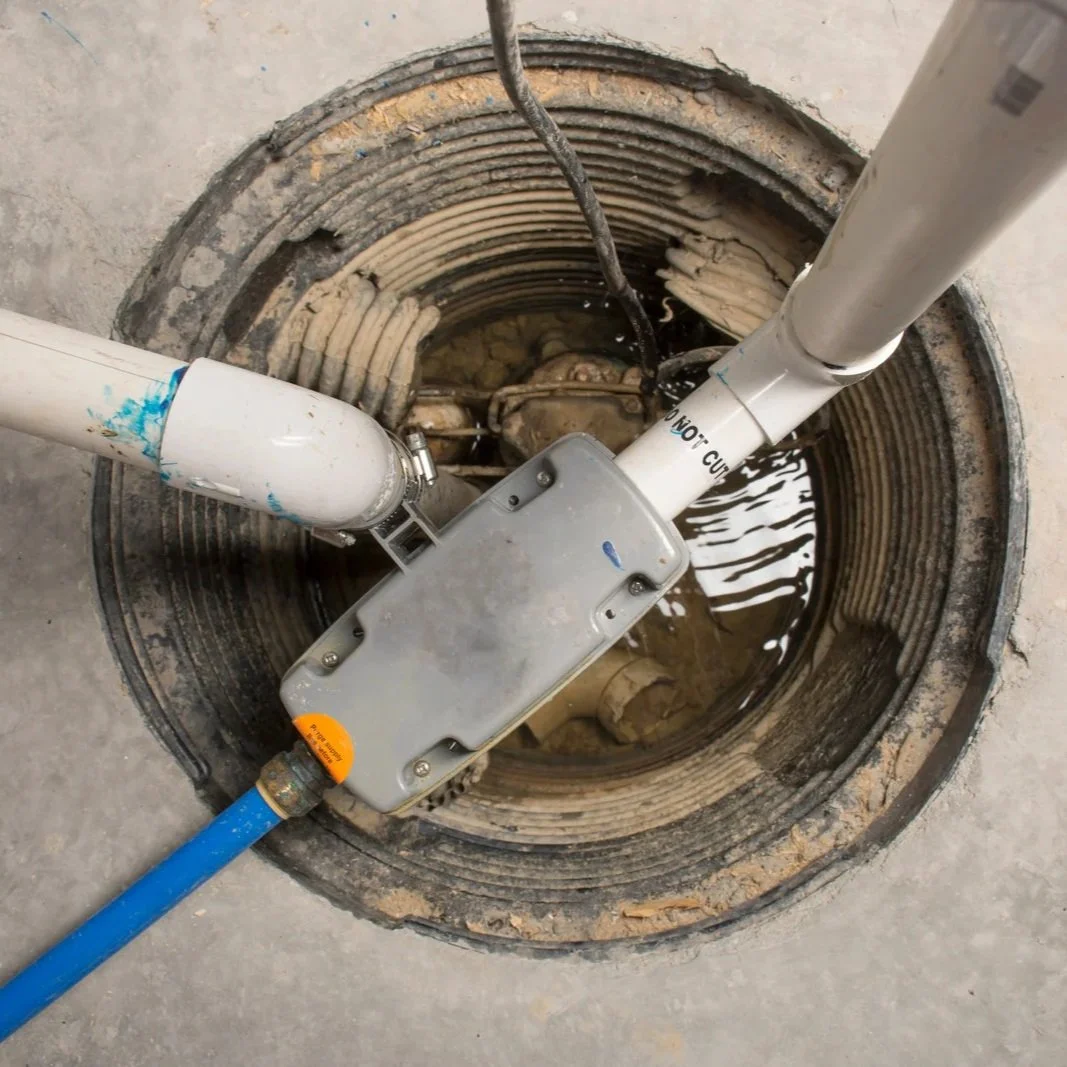
Pedestal pumps — where the motor sits on a column above the pit rather than submerged in it — often run longer because the motor stays dry. The trade-off is noise and reduced power; they're louder and less common in modern installations. Submersible pumps are quieter, more powerful, and standard in most residential basements today. But the motor lives in water, and water is hard on bearings and seals over time.
What actually wears a pump out
Age isn't the only factor. Some pumps reach 10 years in good shape. Others fail at six. The difference usually comes down to how hard the pump has been working and what it's been working against.
Cycle count, not calendar years
A sump pump that activates twice a year in a low-water-table area is barely used. One that cycles every 15 minutes during a wet spring is accumulating hundreds of hours of run time. Older neighborhoods built on clay-heavy soil — where groundwater moves slowly and stays high — can put a pump through more cycles in a single wet season than a pump in a drier area logs in five years. The motor bearings, float switch, and impeller all have a finite number of cycles in them. Run them twice as often, and they wear out twice as fast.
A failed check valve quietly destroys pumps
The check valve is a one-way gate on the discharge pipe. When the pump shuts off, water sitting in the pipe above the pump would otherwise fall straight back into the pit. The check valve stops that. When it fails, the pump shuts off, the water in the pipe drops back in, the float rises, and the pump kicks right back on. Short cycling. It might run a hundred extra cycles during a single rain event. The motor overheats. Bearings wear. A pump that had three years left is done by next spring.
It's like a bucket with a hole in the bottom. The pump isn't broken — it just can't get ahead. Every cycle drains the motor a little more.
Hard water accelerates wear
In much of Berks County and Montgomery County, the water is hard. High mineral content means calcium and magnesium scale build up on the pump's impeller — the spinning component that actually moves water — the same way scale forms inside a water heater or on a faucet aerator. Scale on the impeller cuts efficiency. The pump moves less water per revolution. The motor works harder to compensate, and that added strain shortens the service life by years.
Mineral scale on a sump pump impeller works the same way it does on a showerhead — the openings get smaller, the output drops, and the pump has to work harder to push the same volume of water. The difference is that you can soak a showerhead in vinegar overnight. A caked impeller usually means the pump is running on borrowed time.
Discharge run length and height
The farther and higher a pump has to push water, the harder the motor works on every cycle. A pump in a deep basement pushing water up 10 feet and then 30 feet horizontally is under far more load than a crawl space unit pushing water 4 feet up and out. An undersized pump — or one that was right for a short discharge run until someone extended it — strains on every cycle and burns out the motor years ahead of schedule.
Signs a sump pump is reaching the end
Failing pumps usually warn you before they quit. Not always loudly. But the signals are there if you know what to look for.
Noise it didn't use to make
A healthy sump pump hums. Quiet enough that you might not notice it unless you're standing in the basement. Grinding, rattling, or clanking sounds point to worn bearings, a damaged impeller, or debris caught in the intake. Gravel and sediment collect at the bottom of poorly maintained pits, the pump pulls them in, and the impeller hits them. The damage builds with every cycle.
Running when it shouldn't
If the pump is cycling when it hasn't rained, and there's no active groundwater intrusion, either the float switch is stuck in the "on" position or the check valve has failed, and the pump is chasing its own discharge water back into the pit. Constant running in dry conditions isn't a hydrology problem. It's a mechanical failure.
Visible rust or corrosion
Look at the pump — or look into the pit at it. Rust flakes in the water at the bottom of the pit, or significant corrosion on the housing, mean the metal components are breaking down. Once the housing is compromised, moisture reaches the motor internals. and the failure moves fast.
It didn't activate when you needed it
A pump that failed to turn on during a storm has either a seized float switch, an electrical fault, or a dead motor. Any of those is a replacement conversation, not a repair one.
It's over 10 years old
Even if it's running fine right now. A pump past 10 years has worn bearings, a float switch that's been through thousands of cycles, and — in a hard-water area — impeller scale that's been accumulating for a decade. The question isn't whether it will fail. It's whether it fails during a dry week in August or during the worst storm of the year.
When to repair versus replace
Not every problem requires a new pump. A stuck float switch is a $50–$150 repair. A failed check valve is similar. A clogged intake screen can be cleared in a single maintenance visit.
But the replacement case gets clearer when the motor has seized, the pump is past 10 years and showing any sign of decline, or you've had two or more service calls in two years. At that point, the repair cost relative to a new unit stops making financial sense — and the reliability question matters more than the dollar amount.
And the timing matters too. Replacing a pump on your schedule, before it fails, is a lot cheaper than an emergency call at 2 a.m. during a storm. A replacement submersible professionally installed typically runs $400–$800 for a straightforward swap. Adding a battery backup at the same time costs another $300–$600 but means the pump keeps running through a power outage — exactly when you need it most.
What extends a sump pump's life
Test it every three months. Pour a five-gallon bucket of water into the pit, watch the float rise, confirm the pump activates, drains the water, and shuts off cleanly. Takes five minutes and catches a failing float switch before it becomes a flood.
Keep the pit clean. Once a year, unplug the pump, pull it out, and clear the sediment, gravel, and grit sitting at the bottom. That debris is what damages impellers.
Have a plumber check the check valve annually. It's the most overlooked component in the system. When it fails, it quietly destroys the pump over the following season — while everything looks fine from the outside because the pump keeps running.
Frequently Asked Questions
A pump that activates frequently — daily or near-daily during wet months — wears out faster than one that rarely runs. In high-water-table situations, expect the lower end of the lifespan range: 5 to 7 years before a replacement conversation is warranted. Adding a battery backup pump to share the load extends both units.
Submersible pumps typically last 7 to 10 years. The motor lives in the water and is subject to moisture and thermal cycling. Pedestal pumps have motors mounted above the pit on a dry column and often last 10 to 15 years. But submersible pumps are quieter, more powerful, and standard in modern residential installations.
Look for the data plate on the side of the pump housing. Most manufacturers encode the manufacture date in the serial number — often in the first four to six digits. If the label is worn or missing, a licensed plumber can usually identify the model and decode the age from the serial format. If neither is possible, treat the pump as unknown-age and get it inspected.
If the pump is at or past 10 years and you're in a wet climate or high-water-table area, proactive replacement is a reasonable call. The cost of a new pump is a fraction of what water damage restoration runs. The risk of unexpected failure increases sharply after the 10-year mark.
Sometimes. Constant running from a stuck float switch is often fixable. Constant running from a failed check valve may be solved by replacing just the valve. But if it's been running non-stop for weeks and the motor is warm to the touch or making noise, the internal damage may already be done — and replacement is the more reliable path.
Yes. Mineral scale from hard water coats the impeller year after year, cutting efficiency and increasing motor strain. In high-hardness areas, annual maintenance that includes cleaning the pump internals can add two or three years to the service life compared to a pump that goes uninspected.
Running a sump pump until it fails is a manageable risk in August. During a March storm with an inch of rain forecast overnight, it's a flooded basement. The difference usually comes down to knowing where your pump stands — how old it is, how hard it's been working, and whether the warning signs are already there.
