
Repair or Replace: How to Decide on an Aging Water Heater
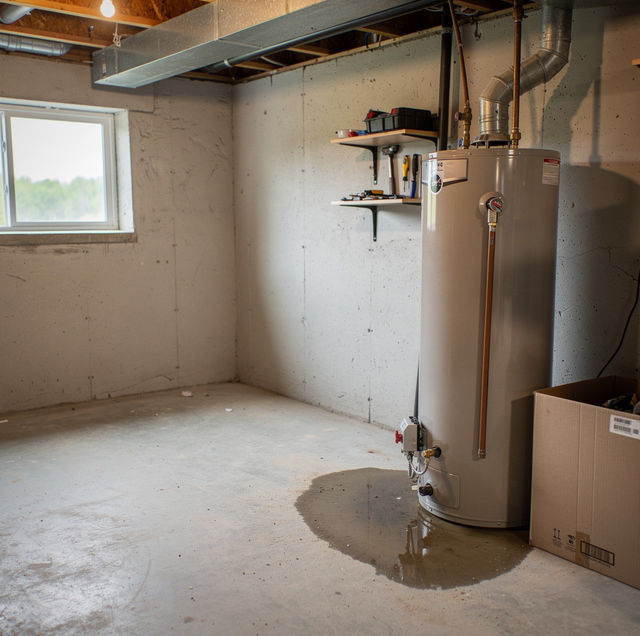
A water heater rarely gives out without warning, but it also rarely announces "replace me" in plain terms. Instead, you get a string of small clues, and the hard part is deciding whether the next clue means a quick fix or a new unit. Getting that call right saves you from throwing another repair at a tank that is already on its way out, and it also saves you from replacing a heater that only needed one part swapped.
This is a framework for making that call, built around three factors: how old the unit is, what specific signs it shows, and how many times you have patched it.
How Long a Tank Water Heater Should Last
Most standard tank units are built to run for somewhere between eight and twelve years before the tank itself starts to fail. Tankless units last considerably longer, often lasting well over 15 years, because they hold no standing water and have no tank lining to corrode. The number stamped in the serial code on the data label indicates the actual manufacturing date, which matters more than how the unit looks or how it currently performs, since a tank can run fine right up until the week it fails.
Age alone is not a reason to replace a heater that is working well. But age changes what any new symptom means. A two-year-old unit with a stuck thermostat is a component problem. A twelve-year-old unit with the same symptom is a tank that is telling you its supporting parts are wearing out right along with the steel underneath, and the next issue may not be so minor.
Reading the Warning Signs Correctly
Four signs carry real weight when you are deciding what to do next, and each one points at a different part of the unit.
Rust-colored water from the hot tap, especially when the cold tap runs clear, suggests the tank lining is breaking down from the inside. This is corrosion, not a fixable part, and it only moves in one direction.
Popping or rumbling sounds coming from inside the tank are water working its way through a crust of hardened mineral sediment that has settled on the bottom. That layer insulates the steel from the heat source, so the metal underneath runs hotter than it should and wears faster than the water temperature alone would suggest.
Water collecting at the base of the tank is the sign that demands the fastest response. A wet fitting or loose connection can sometimes be tightened or swapped, but water seeping from the tank shell itself means the vessel has already begun to fail structurally, and a slow seep can turn into a sudden release with no further warning.
Hot water that runs out sooner than it used to, or never gets fully hot, can mean sediment has eaten into usable tank capacity, a heating element or burner is losing efficiency, or the household's demand has grown past what the unit was sized to handle.
When a Repair Is a Reasonable Stopgap
Repair earns its keep on a heater that is still within its expected working life and showing exactly one isolated problem. A failed thermostat, a burned-out heating element, a pilot assembly that will not stay lit, or a temperature and pressure relief valve that needs swapping are all component failures on a system that is otherwise sound. None of them says anything about the tank itself.
A repair also makes sense when the water at the base is coming from a fitting, a drain valve, or a loose union rather than the tank shell. Those connections can be resealed or replaced without touching the vessel, and doing so fully restores the unit rather than merely postponing the same call.
Sediment buildup that has not yet caused popping or reduced capacity noticeably is worth addressing with a flush rather than a replacement. Clearing it out on a younger unit resets the clock on that particular wear mechanism, at least for a while.
The common thread across every reasonable repair: the tank itself is not the thing failing, and the unit has not already used up most of its expected life.
When Replacement Is Clearly the Better Call
Replacement becomes the sound choice once the tank has passed roughly a decade and starts showing any of the four signs above, because at that point a repair is being layered onto a vessel that is already corroding or sediment-packed, rather than fixing an isolated part on an otherwise sound unit.
Any leak traced to the tank shell itself, rather than a fitting, settles the question outright. A tank does not reseal itself, and the leak only widens from there. Waiting on a confirmed tank leak trades a scheduled swap for the risk of an unscheduled flood.
A pattern of repeat repairs is another clear signal, even when each individual fix looks small on its own. A unit that has needed attention two or three times within a short stretch is telling you its parts are failing in sequence as the whole system ages, and the next call is rarely the last.
Rising energy use to heat the same amount of water, without any other explanation, points to a unit working harder than it should to do the same job, which is often sediment or heating-element wear compounding on an older tank rather than a problem worth chasing part by part.
Weighing Reliability Against Repeated Repairs
The real question behind repair or replace is not which single fix costs less. It is which choice buys you more reliable hot water going forward. A repair on a young heater with one clear fault restores a system with years of expected service still ahead of it, so the reliability payoff is high relative to the effort.
A repair on an aging tank works differently. Even a successful fix only addresses the one symptom you noticed. The corrosion or sediment causing it keeps progressing underneath, unaffected by whatever part got replaced, so the next symptom is often just as close as the last one was. Each repair on an old tank tends to buy less time than the last, and the tank ends its life the same way: with a failure, not a graceful retirement.
Reliability also has to account for what happens if the unit fails between now and the next scheduled check. A component failure on a young heater usually just means no hot water until it is fixed. A tank failure on an old heater can mean water reaching the floor, nearby framing, or whatever is stored in the same closet or basement bay. Factoring in that downside is part of an honest comparison, not an emotional one.
Making the Call With a Full Picture
Before deciding, run through the same three questions every time: how old is the unit, is the current issue isolated to one part or does it involve the tank itself, and has this heater already needed more than one repair recently. A young unit with a single isolated fault almost always warrants repair. An older unit with a tank-level symptom, a pattern of repeated calls, or any sign of an actual leak almost always indicates replacement.
There is a middle zone, usually a unit in its later working years with a first, single, non-tank issue. In that zone, a repair is defensible, but it is worth going in with the understanding that a replacement conversation is likely coming within the next year or two, regardless of how this particular fix goes. Planning for that ahead of time, rather than being surprised by it, turns replacement into a scheduled project rather than an emergency.
Frequently Asked Questions
Check the data label on the side of the tank for the serial number. Most manufacturers encode the manufacture date into the first several digits or letters of that serial number, though the exact format varies by brand. If the label has worn off or the code is unclear, a technician can usually determine the unit's age from its model number and physical features. Do not rely on how long you have personally owned the house or the unit, since a heater installed by a previous owner may already be well into its service life by the time you move in.
It depends entirely on where the water is coming from. A leak at a fitting, a drain valve, a supply connection, or the temperature and pressure relief valve's discharge pipe is a repair, because none of those involve the tank vessel itself. A leak from the tank body, including moisture seeping from a seam or from underneath the unit with no connection nearby to explain it, means the vessel has failed, and no repair restores it. Tracing the exact source before assuming either outcome is worth the few extra minutes it takes.
The same logic applies, but the timeline and the signs of failure differ. Tankless units have no standing water and no tank to corrode, so their service life runs longer, often close to twenty years, and they do not develop the sediment-crust rumbling that tank units show. Their common issues are mineral scale on the heat exchanger, error codes from the control board, or reduced flow, and those are usually repairable well into the unit's life. Total failure of the heat exchanger itself, rather than a control or scale issue, is the point where replacement becomes the better call.
No fixed number applies to every situation, but a pattern is more telling than any single count. One repair on a unit within its expected service life is routine. Two or three separate repairs within a short stretch, especially on a unit already past the midpoint of its expected life, usually means components are failing in sequence as the whole system ages, rather than a single bad part in isolation. At that point, a repair addresses the symptom in front of you without changing what is coming next.
Yes, when the age and the signs line up. A unit past its expected service life that is already showing rust-colored water, sediment noise, or any leak is very likely to fail without much more warning than it has already given, and a failure that happens on its own schedule instead of yours usually means no hot water at an inconvenient moment and possibly water reaching the floor. Replacing on your own timeline lets you compare options calmly and get the new unit sized correctly for your household, rather than accepting whatever can be installed fastest.
Mineral-heavy water accelerates two of the main wear mechanisms directly. It speeds up the sediment that settles and hardens on the tank bottom, which is the layer behind popping and rumbling sounds, and it adds to the mineral scale that can affect heating elements and valves. A unit running on mineral-heavy water for its entire life may show these signs earlier than the general age range would suggest, which is another reason to weigh symptoms alongside age rather than relying on age alone.
Not sure whether your water heater needs a repair or a full replacement — get an honest opinion from a licensed plumber before you decide. East Coast Plumbing serves Barto, Boyertown, and Pottstown. Call (610) 944-2998.
