
The phone call most plumbers dread giving goes something like this: "We found another pinhole in the kitchen line. Third one this year." You already know what's coming. You've been patching a failing galvanized system one section at a time for a decade, and the repairs are starting to cost more than the solution would have years ago.
Whole-house repiping isn't cheap, and the number you get quoted will feel wide until you understand what's actually driving it. For a mid-size home in eastern Pennsylvania — two stories, three bathrooms, original 1960s or 1970s galvanized supply lines — total project cost typically lands between $7,000 and $14,000 depending on pipe material, access conditions, and fixture count. Three houses the same size on the same street can produce quotes $4,000 apart. Here's what's behind those differences.
A Quick Reference: What Repiping Costs by Home Size
These ranges cover full projects — material, labor, permits, and standard drywall patching — using PEX as the pipe material. Copper runs roughly 40–70% higher for the same home.
| Home Size | PEX Repiping | Copper Repiping |
|---|---|---|
| Under 1,000 sq ft | $3,500–$6,000 | $6,000–$10,000 |
| 1,000–1,500 sq ft | $5,000–$8,000 | $8,000–$13,000 |
| 1,500–2,500 sq ft | $7,000–$14,000 | $10,000–$20,000 |
| 2,500–3,500 sq ft | $11,000–$18,000 | $16,000–$28,000 |
| 3,500+ sq ft | $15,000–$25,000+ | $22,000–$35,000+ |
Drywall work beyond basic patching — texture matching, tile repair, painting — is typically quoted separately. Budget an additional $500–$2,500, depending on how many walls were opened.
Why Galvanized Pipes Fail the Way They Do
Most whole-house repipes in eastern Pennsylvania happen because galvanized steel supply lines have run out of road. The failure pattern matters, because it tells you how urgent the project really is.
Galvanized pipe corrodes from the inside out. The zinc coating was designed to protect the steel — and it does, for a while. But water moving through the pipe over decades deposits minerals on the inner walls. Hard water speeds this up considerably, and Berks and Montgomery Counties run hard. The deposits narrow the interior diameter, flow drops, rust-colored water starts showing up at faucets, and then pinhole leaks begin at joints where the pipe wall has thinned enough to give way.
Think of it like the inside of a tea kettle that has been running hard water for forty years and never been descaled — the opening doesn't disappear, it just keeps getting smaller. But you can't soak galvanized pipes in vinegar and fix it. Once the interior is corroded that far, you're replacing pipe.
Polybutylene is a different failure mode. That gray flexible plastic — common in homes built between 1978 and 1995 — becomes brittle from years of contact with chlorinated municipal water. It tends to fail at fittings, often without warning. If you have gray flexible pipe with "PB2110" stamped on it, don't wait for a leak. Replacing it proactively costs a fraction of what a failed fitting and the subsequent water damage will run.
Home Size Gets You Started. It Doesn't Finish the Quote.
Total square footage sets a rough baseline for how much pipe the job will need. But a plumber building an actual quote is counting fixtures, estimating wall openings, and looking at how the pipe runs are configured inside the home.
A 1,600-square-foot ranch and a 1,600-square-foot colonial with the same number of bathrooms can produce quotes thousands of dollars apart. The ranch spreads everything horizontally — easier runs, more accessible walls. The colonial stacks bathrooms vertically, which means supply lines climbing interior walls, more penetrations, and longer labor time at the same square footage.
Labor runs 40–60% of most repipe quotes. A two-person crew working in eastern PA's current market will spend 3–5 full days on a 1,500–2,000 square foot home. PEX installs faster than copper because the flexibility lets it snake through walls with fewer holes — that's not just a material cost difference, it's a real labor savings.
PEX vs. Copper: What the Cost Gap Actually Means
The pipe material is the single biggest lever in a repipe quote. And the gap is substantial — copper installed typically runs $5.00–$10.00 per linear foot versus $1.50–$3.50 for PEX. On a full house, that's a $5,000–$8,000 difference before fixtures and access are even factored in.
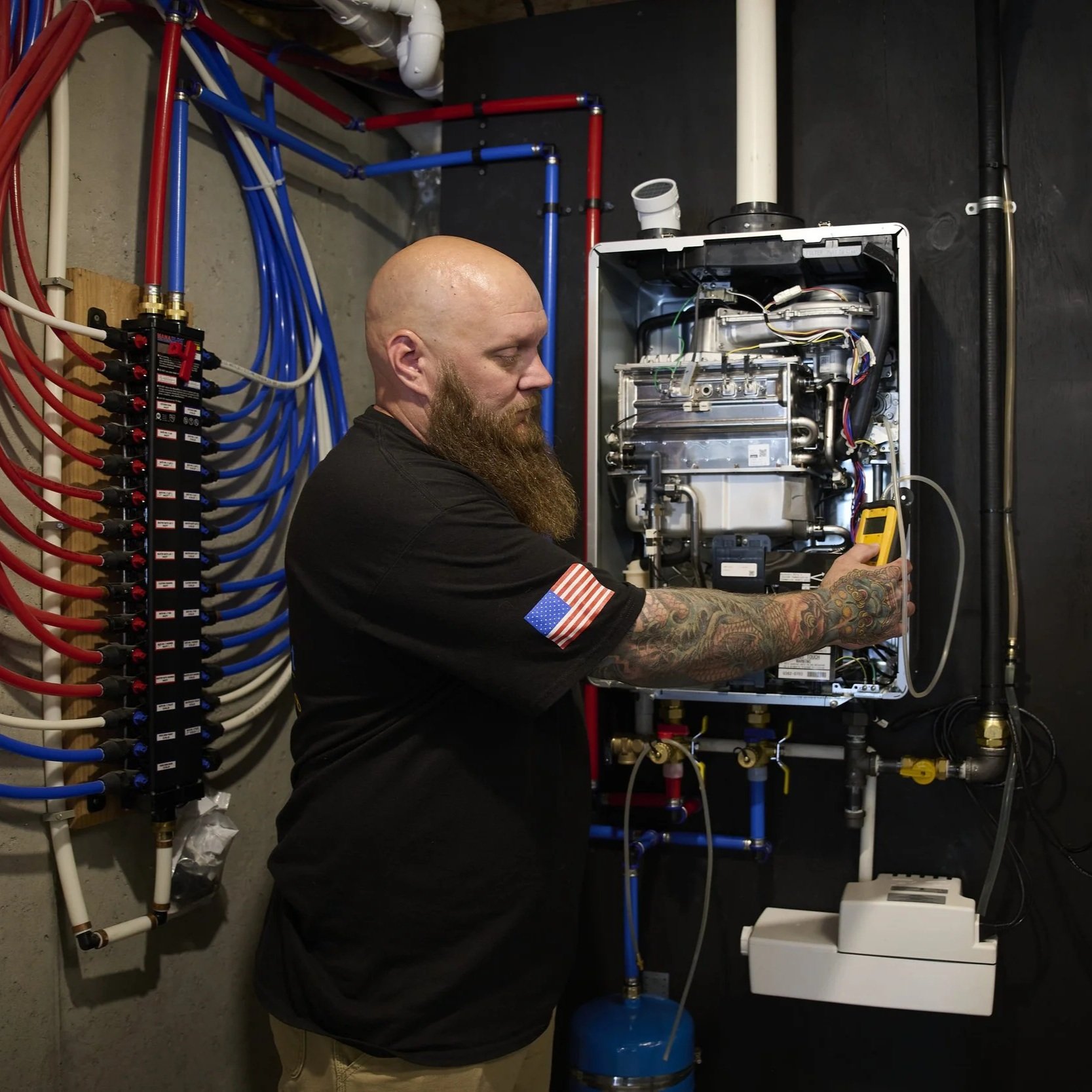
PEX (cross-linked polyethylene) now accounts for the majority of residential repipes nationally, and for good reason. It's flexible enough to run long continuous spans through walls and attics with far fewer joints than rigid copper. Fewer joints mean fewer future leak points. It handles freeze-thaw cycles better than rigid materials — which matters when supply lines run near exterior walls in older colonial construction. And in hard-water areas, it doesn't scale internally the way galvanized does.
Copper's case is real, just narrower. It has a lifespan of 50–70 years, adds clear value to a home appraisal in ways buyers understand, and remains the premium choice for homeowners planning to stay long-term who want maximum service life. If your home already has copper everywhere else and you're replacing a failed section, matching materials makes sense. But for most whole-house replacements on galvanized or polybutylene systems, PEX delivers better value by a wide margin.
CPVC sits in the middle — roughly 25% above PEX in installed cost, handles hot-water lines well, and sees less whole-house use than it once did as PEX has improved. It's not the wrong choice, but it's rarely the obvious one.
What Your Foundation Does to the Price
Slab foundations add meaningful cost. When supply lines run through or under a concrete slab, a plumber has two options: break through the concrete or reroute the entire supply system through the attic and interior walls.
Most plumbers choose the reroute. Jackhammering creates more structural disruption and often doesn't produce a better long-term result. But rerouting adds linear footage, additional wall work, and more labor time — a slab repipe on a 1,500-square-foot home can run $2,000–$4,000 above the same job on a home with accessible basement or crawl space.
Older homes in eastern PA — colonials, split-levels, Cape Cods built in the postwar decades — typically have full basements. That's actually an advantage for repiping. Exposed supply runs visible from a finished basement are far easier to access than anything buried in slab. If you can walk into your basement and see pipe, you're already on the cheaper end of the access spectrum.
Attic access helps too. PEX can be run through an attic and dropped to fixtures — every wall opening avoided is time and drywall repair saved.
Fixtures and Stories: The Variables Plumbers Price Separately
Many contractors price repiping on a per-fixture basis in addition to linear footage, typically $150–$350 per connection. Each sink, toilet, shower, bathtub, dishwasher, washing machine, utility sink, and outdoor hose bib adds to the count.
A 1,800-square-foot home with two full baths and a half bath sits at a very different price point than an identical-size home with three full baths, a wet bar, and a utility connection in the garage. The second home can be $3,000–$4,000 more even at identical square footage. And multi-story construction adds cost because supply lines must run vertically through interior walls, increasing penetrations and labor time.
Outdoor hose bibs are worth flagging specifically. Older eastern PA homes often added exterior faucets at different points over the decades — a hose bib at the back, one at the side, one near the garage. Each one needs to be tied into the new supply system. It sounds minor, but five exterior connections is a different scope than two.
What the Quote Should Include — and What Often Isn't
A written repipe scope should spell out what's covered. The gap between competing quotes is usually not in labor rates — it's in what each contractor is and isn't including.
A solid quote covers removal of all existing supply piping, installation of new pipe throughout, all fittings and valves, wall access cuts and basic drywall patching, a pressure test before the job is signed off, and permit fees pulled by the plumber.
What's frequently excluded or quoted separately: full drywall restoration and painting beyond basic patching, tile repair if bathroom or kitchen tile had to be cut, and water heater replacement. On that last point — many plumbers will discount the water heater labor significantly when it's bundled with a repipe, since the system is already drained and they're already on-site. If your water heater is more than 10 years old, it's worth asking for a combined quote.
The permit question matters more than people realize. Whole-house repiping requires a permit and final inspection in virtually every Pennsylvania jurisdiction. A plumber who suggests skipping it to save money is not looking out for you. Permitted work gets inspected; the inspection catches errors before they're buried in walls; and the permit certificate matters when you sell. Don't skip it.
Should You Repipe Now or Try to Phase It?
Partial repiping — replacing a failing section while leaving older pipe in place — costs less upfront. It rarely costs less over time.
The failure pattern in aging galvanized systems doesn't stay in one spot. Replace a section in the kitchen, and the bathroom lines continue corroding at the same rate. The pinhole leaks follow the pipe, not the patch. Most homeowners who do three or four partial repairs over five or six years end up spending as much as a full repipe would have cost, with the added cost of multiple service calls and multiple rounds of drywall repair.
But partial repiping isn't always wrong. If a specific known failure point exists in an otherwise well-maintained older system, and budget constraints make a full repipe impractical right now, a partial job as a near-term fix is defensible. Do it, get a written estimate for the full project, and plan the larger repipe within 12–24 months. What doesn't work is treating partial repairs as a long-term strategy.
Most repipe projects run 2–5 days for a typical home. Water gets shut off during working hours and restored each evening — most families stay in the house throughout. PEX installs faster than copper at every size because fewer wall openings are required, and a two-person crew can typically complete a 2,000-square-foot PEX repipe in 3–4 days.
Frequently Asked Questions
Galvanized supply lines are dull gray metal — not copper-colored, not plastic. Look at exposed supply lines in your basement or under sinks. The exterior will be dull silver or slightly rusty at fittings and joints. A plumber can confirm your pipe material during a standard service call if the lines aren't visible from any accessible space.
No. Standard homeowners policies cover water damage from a burst pipe — floors, walls, belongings — but not the pipe replacement itself. Repiping is a maintenance project, not a covered loss. Some insurers offer service line endorsements, but whole-house repiping is typically outside their scope as well.
Permit fees for whole-house repiping in Pennsylvania jurisdictions typically run $100–$400. The plumber pulls it on your behalf as part of the project. A permit means a licensed inspector signs off on the completed work — which matters for safety and for your home's future sale.
For most homeowners, yes. Since the system is drained and the crew is already on-site, the incremental labor cost for a simultaneous water heater swap is lower than a standalone job. If the heater is more than 10 years old — especially in a hard-water area where sediment builds faster — get a bundled quote.
PEX carries an expected service life of 25–50 years. It's newer than copper, so the long-term real-world data is still accumulating, but lab testing and manufacturer data support the 50-year figure under normal residential use. In hard-water conditions, PEX's resistance to internal scale buildup is a real performance advantage over galvanized steel.
PEX needs fewer wall openings because the flexible tubing runs through existing framing without as much cutting. A two-person crew typically finishes a 2,000-square-foot PEX repipe in 3–4 days; the same home in copper runs 5–6 days. Fewer holes opened also means less drywall repair afterward. That's worth factoring into the material comparison alongside the raw cost difference.
Getting itemized quotes from two or three plumbers — written ones that specify materials, fixture count, permit handling, and what's excluded — gives you enough to make a real comparison. Quotes built on square footage alone aren't quotes; they're guesses. The plumber who walks your basement, counts your fixtures, and looks at your foundation is the one giving you a number you can actually use.
