
Each drain in your home is supposed to keep sewer gas on the far side of a water seal, so the moment you catch that smell indoors, something along that chain has failed. Pinning down where the odor first appears is the starting point before anyone touches a wrench, because a smell at a toilet base, one at a floor drain, and one that fills the whole house after a storm each points to a different source. The table below is a starting point; the sections that follow explain why each location behaves as it does.
| Where You Notice It | What It Points To |
|---|---|
| One drain you almost never use | The trap under it has dried out |
| Right at the base of a toilet | A failed wax ring or flange seal |
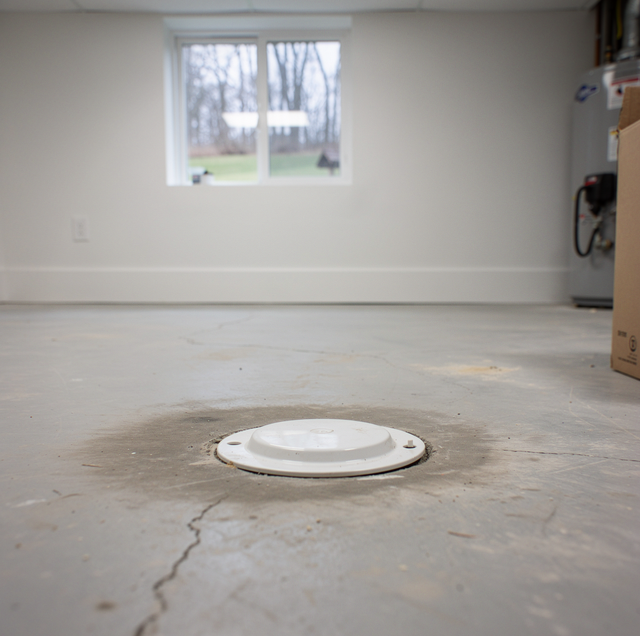
| A basement floor drain | A dried trap or a vent path that's lost its air supply |
| Through the whole house, worse after rain | A cracked drain line that groundwater reaches after rain |
| Near the water heater or furnace | Sometimes not sewage at all; a gas smell needs different handling |
| The laundry standpipe | A trap that's siphoned by the washer's drain surge or has gone dry between wash loads |
What a Trap Seal Does and How It Evaporates
Underneath every sink, tub, and floor drain sits a curved section of pipe that holds a column of standing water. That water plug is the entire barrier between your living space and the vented drain system behind the wall, and it works passively: no moving parts, no valve, just water sitting in a bend low enough that gas can't push past it. Regular use keeps water moving through that bend each time the fixture drains, which helps keep the seal intact.
The problem shows up in fixtures that sit idle: a guest bathroom, a basement floor drain, a laundry standpipe between wash days. With no fresh water moving through, the trap slowly loses its seal to evaporation, and once the water level drops below the bend, gas has an open, unobstructed path straight up into the room. An idle fixture that develops a smell with no other symptom, and no odor anywhere else in the house, is the pattern a dry trap produces; a crack in that same fixture's own branch line can look similar, which is why the fix below is worth trying before assuming anything more is wrong. Running water through the fixture for a minute rebuilds the plug.
Run water through every idle drain, guest bathrooms, basement floor drains, laundry standpipes, once a month. It takes under a minute per fixture and keeps every trap's water seal intact, which heads off single-drain odor complaints before they start.
The Toilet's Wax Ring
A toilet uses a different kind of seal than a water-filled trap. Where the base of the bowl meets the closet flange in the floor, a wax ring (or a newer wax-free gasket) forms a compressed barrier that keeps gas from escaping around the base. That seal only works if the toilet sits flat and square on the flange with even pressure all the way around.
That seal also breaks down over time when a flange has shifted or corroded, or when the wax itself dries and cracks after years in place. Once the seal fails, gas escapes at floor level around the toilet's base rather than through the bowl, so the smell in this case sits low to the ground and close to that one fixture, not spread through the room. A toilet that rocks even slightly when you shift your weight against it is a clue worth acting on, because each rock works the wax loose from the flange.
Vent Stack Blockages and Siphoned Traps
A vent stack rises from your drain lines and feeds outside air into the drain behind each fixture so falling water does not suck the trap seal. A blockage at the roof opening or a crushed vent pipe can cut off that air supply, and once the air source is gone, drainage anywhere on that branch can begin siphoning water straight out of a nearby trap instead of pulling air from above. A starved vent that leaves drains gurgling and sluggish elsewhere in the house can also pull the water seal out of a weak trap and let gas through.
A whole-house odor that turns up after rain has a checkable cause: groundwater rising after a storm can seep into a cracked drain line, and a crack that lets water in also lets sewer gas out. A smell that fades and returns with the weather points toward a cracked line rather than a single dry trap.
A Cracked Drain or Vent Pipe Inside a Wall
Not every leak point sits somewhere you can see it. This is a different pipe than the underground line reaching the street: here, a branch drain or vent line hidden inside an interior wall can work loose at a seam or split outright, whether from age, settling, or a nail driven through it during other work in the house, and the gas finds its way into that wall space instead of reaching a fixture or the roof. That kind of leak can center on one room or one wall, with no obvious drain nearby to blame.
This cause is difficult to diagnose by smell alone, because there's no fixture to check and no visible sign beyond the odor itself. A crack behind drywall stays hidden until someone traces the actual pipe path. That can mean opening a section of wall, though a test that finds the leak without cutting anything first avoids that step entirely.
When the Smell Isn't Sewer at All
Not every bad smell near your plumbing is sewage. A gas appliance, like a water heater or furnace, can develop a leak that produces its own rotten-egg odor, and that smell is easy to confuse with sewer gas, especially if the appliance sits near a floor drain or in a utility room where you'd also expect drain odors. The two causes need completely different responses, so telling them apart matters. Sewer gas itself is also a real health risk if it collects in a closed room, so either smell deserves attention rather than being masked, and neither one should ever be met with a mix of cleaning chemicals.
A rotten-egg smell near a water heater or furnace can mean a gas leak, not sewage. Leave the house immediately, call your gas utility from outside, and let them investigate; don't flip switches or search for the source yourself.
What a Smoke or Camera Test Finds
When the smell doesn't trace cleanly to one drain, a toilet base, or an obvious appliance, the next step is a test that shows the whole system at once instead of one fixture at a time. A smoke test blows harmless, non-toxic smoke into the drain system at a cleanout or the roof vent, caps the other roof openings once smoke shows at them, and holds the system under light pressure. Smoke escaping anywhere along the way, at a cracked pipe inside a wall, a loose fitting, a forgotten drain whose trap was missed, or a failed wax ring, becomes visible right where the leak is, turning a guessing game into a location.
When a smoke test indicates a suspected crack rather than a simple seal failure, a camera run through the line confirms exactly what's there before anyone opens a wall. Between the two, a smoke or camera test traces the odor to a point, not a general area, which decides whether the fix is a five-minute trap refill or something bigger.
Frequently Asked Questions
Yes, when a dried trap was the only cause. For a floor drain connected to a trap primer line, the refill is supposed to happen automatically on a schedule, so if the smell keeps returning, the primer line itself may be clogged or disconnected rather than the trap simply going dry again.
Not necessarily. Loose closet bolts, rather than the wax ring, can also make a toilet rock, and re-tightening them evenly can fix it. Overtightening those same bolts, though, can crack the porcelain base, so it's a careful adjustment rather than cranking them down as far as they'll go.
Yes, when fixtures share a vent through a setup called wet venting, where one vent pipe serves the trap protection for an entire group of drains instead of each fixture having its own. A single blockage at that shared vent can pull water out of several traps at once, so an odor problem may appear in more than one fixture in the same bathroom group.
The compound responsible, hydrogen sulfide, is detectable by the human nose at extremely low concentrations, in the parts-per-billion range, long before it reaches a level that's hazardous to breathe. In a sense, that's the point: the smell itself is an early-warning signal that something in the system has failed. At high concentrations, the same gas numbs the sense of smell, so an odor that seems to fade in a closed room is a reason to ventilate and leave, not a sign it has cleared.
Before the test starts, every trap in the building gets filled with water so the smoke can't simply exit through a normal, working seal the same way sewer gas can't. With all the traps holding water, any smoke that does escape is coming from a break in the system rather than a normal drain doing what it's built to do, which is what makes the test reliable.
Yes, if the closet flange sits at the wrong height relative to the finished floor. A standard wax ring is built to compress a specific amount, and a flange that sits noticeably below the floor surface won't let that ring seal properly no matter how new it is. The fix in that case is a flange extender or a thicker double-wax ring, rather than simply swapping in another standard one and expecting a different result.
Pin down a persistent sewer odor at its source — a plumber checks every trap, seal, and vent and runs a camera through the line where a crack is suspected. East Coast Plumbing serves Barto, Boyertown, and Pottstown. Call (610) 944-2998.