
Radiator Knocking or Cold? What the Noise Is Telling You
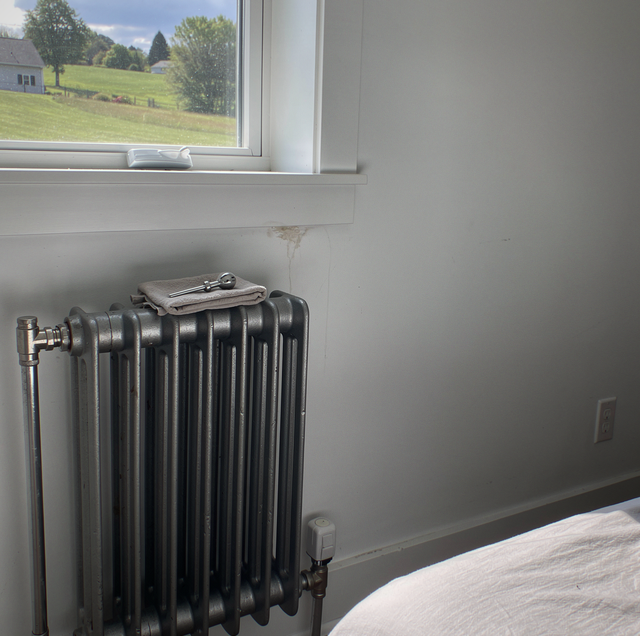
The house goes quiet around eleven at night, and that's when the radiator in the back bedroom starts up: a metallic knock, then a longer gurgle, almost like someone tapping a wrench against the pipe below the floor. Down the hall, the radiator in the smaller room hasn't put out real heat in three days, no matter how long the system runs. Both complaints are common in steam and hot-water heating, and both trace back to a short list of mechanical causes. Most of them you can diagnose by ear and by touch before deciding whether the fix takes five minutes or belongs to someone who works on boilers for a living.
Why Radiators Knock In A Hot-Water System
A hot-water, or hydronic, system pushes heated water from a boiler through a loop of pipe to each radiator and back again. Every radiator has a vent or bleed point near the top, and that point matters because air gets into the loop more easily than most people expect: during the initial fill, after any repair that opens the system, or slowly through a failing expansion tank. Air is lighter than water, so it rises and collects at the highest point of a loop, often right inside the radiator itself.
When moving water reaches that trapped pocket, the flow doesn't glide through smoothly. It slams against the air, and the sound comes out as a knock or a gurgle at the radiator or in the branch line feeding it. A second, gentler noise is common too: a soft ticking as the pipe heats up and expands against a joist or a strap, then contracts again as the system cools. That ticking builds gradually over a few minutes and fades on its own, which is a useful way to tell it apart from the sharper, more sudden bang that trapped air produces.
Why Radiators Knock In A Steam System
Steam heating relies on a slight, deliberate pitch built into the risers and into the radiators themselves, so that condensate (the water that forms as steam gives up its heat) drains back downhill toward the boiler by gravity. A radiator that has tilted the wrong way over the years, as a house settles or a floor sags, stops draining properly, and condensate pools in the middle instead of running back out.
When steam moving up the pipe meets that stationary puddle, it hits it hard, and the result is the classic banging steam radiator, sometimes loud enough to be heard through the floor above. The fix is frequently as simple as shimming the radiator's low legs so it tilts back toward the supply valve at the correct angle, restoring the drain path steam heating depends on.
Steam Traps And The Hiss That Won't Quit
Two-pipe steam systems, and some one-pipe setups, use small mechanical traps that let air and condensate leave the radiator while holding steam inside where it belongs. When a trap's internal mechanism wears out or clogs with mineral scale, it fails in one of two directions. It can stick open, letting live steam blow through into the return piping, which wastes fuel and often shows up as hissing or knocking in the returns. Or it can stick shut, trapping air and condensate inside the radiator so steam never fills it.
A stuck-shut trap tends to leave a radiator warm near the bottom, where the trap sits, but stubbornly cool at the top. Traps themselves are inexpensive parts, but figuring out which of several traps scattered across a system has actually failed requires someone who routinely works with steam heating.
Why One Radiator Stays Cold While The Rest Of The House Warms Up
In a hot-water system, a single cold radiator most often means trapped air is blocking flow at that one point, which a bleed usually clears. It can also mean the radiator's supply valve is only partly open, or that mineral buildup inside an old valve has narrowed the opening enough to choke the flow even when the valve looks fully open at the handle. In a house with multiple heating zones, a circulator pushes water along the path of least resistance, so a radiator at the far end of a longer loop can end up starved unless the system's balancing valves have been set to divide flow evenly. That kind of imbalance often surfaces right after a renovation, a new zone, or a pump replacement changes how water moves through the loops.
On a steam system, a cold radiator more often points to that little brass air vent near the top. Its job is to let air escape quickly so steam can rush in and fill the radiator before the thermostat is satisfied. If the vent's opening is clogged with old paint or mineral deposit, or if it was sized wrong for that radiator's volume in the first place, air can't get out fast enough and steam never quite catches up.
Bleeding A Radiator Valve Yourself
Bleeding a hot-water radiator is a job most homeowners can handle. With the system running and the radiator warm, fit a bleed key into the small valve near the top, hold a cloth or cup beneath it, and open the valve a quarter turn. You'll hear a hiss as trapped air escapes; once that hiss stops and a thin, steady stream of water comes out instead, close the valve. Doing this once at the start of each heating season keeps most hot-water systems quiet, and it's worth checking the boiler's pressure gauge afterward, since bleeding a radiator lets a small amount of water out along with the air.
Steam radiators don't have a valve to open the same way. The equivalent step is to unscrew the old air vent and replace it with a new one rated for that radiator's size, since a worn or undersized vent behaves the same as a clogged one.
When The Cold Radiator Points To Something Bigger Than Air
Bleeding is quick, low-risk, and solves the problem when trapped air is the actual cause. It's not the whole answer if the same radiator goes cold again within days, or if you find yourself bleeding it every week just to keep it working. Repeated air in one spot usually means air is entering the system somewhere, perhaps through a fitting or an aging expansion tank, rather than a one-time fill issue, and that's a different repair than the bleed itself. A radiator that stays lukewarm even right after bleeding is more likely due to a valve or a balance problem than to an air problem, and no amount of bleeding will fix a valve that won't fully open or a loop fighting for flow against three other zones.
Signs The Job Belongs To A Plumber Or Heating Tech
A few situations call for a professional rather than another round of DIY troubleshooting. If a radiator you've bled more than once still won't hold heat, or a valve feels seized and won't turn smoothly in either direction, that's a repair or replacement job rather than a bleeding job. Shimming a steam radiator's legs is reasonable to attempt, but if the pitch problem traces back to a sagging floor joist or piping that's settled out of level near the boiler, that's a structural and mechanical question at once. A trap you suspect has failed, especially one that's hissing continuously or feels scalding well past where it should, is worth having tested rather than guessed at, since steam systems run under real pressure and near-boiler piping isn't forgiving of trial and error. Rust-colored water coming out during a bleed, or a radiator that's actually leaking at a joint, points to corrosion in the system that warrants a closer look rather than a quick fix to one radiator.
A knocking radiator or a cold one is rarely a mystery once you know what to listen for and where to look. Most of the time the cause is ordinary: air that needs to be let out, a vent that needs cleaning, a radiator that's lost its pitch, and a homeowner can clear it in an afternoon. When the same symptom keeps returning after the obvious fix, that's the signal the problem lives deeper in the system than one bleed valve can reach.
Frequently Asked Questions
A brief tick or tink as metal expands with the first rush of heat is normal in both steam and hot-water systems, and it fades within a minute or two as the pipe finishes expanding. A bang that repeats every cycle, or noise that continues well after the radiator reaches full temperature, is not part of that normal warm-up behavior and instead points to one of the causes above.
No. Most steam radiators don't have a bleed valve at all; they rely on a small air vent that releases air automatically as steam arrives. A chronically cold steam radiator usually means that vent needs cleaning or replacing with one rated for the radiator's volume, not a bleed key and a cloth.
Once at the start of each heating season is standard practice for most homes. A system that just had repair work done, a refill, a new pump, or new piping, can need bleeding again within days, since that kind of work reintroduces air that has to work its way out through each radiator before the system settles.
It can contribute. A steam boiler's low-water cutoff shuts the burner down before low water becomes a safety issue, but water running low can also starve steam pressure unevenly across the system in a way that mimics a pitch problem at one radiator. A chronic knock that doesn't match a simple pitch or trap explanation is worth checking against the boiler's sight glass.
In a two-pipe system, one leg is the supply and the other is the return, which carries condensate back through a trap rather than live steam. A return leg that's warm but noticeably cooler than the supply is often normal. A return leg that's scalding hot right at the trap, though, can mean the trap has failed open and is passing live steam into the return piping instead of holding it back.
Not from the noise by itself, but the underlying cause sometimes does. A steam trap stuck open, or a boiler that short-cycles because one zone keeps starving for water, both tend to waste fuel alongside making noise. A knock that keeps coming back after a bleed or a trap check is worth investigating for that reason as well as for the sound itself.
Get the knocking or cold radiator diagnosed correctly the first time — a quick look often separates a bleed-it-yourself fix from a bigger repair. East Coast Plumbing serves Barto, Boyertown, and Pottstown. Call (610) 944-2998.
