
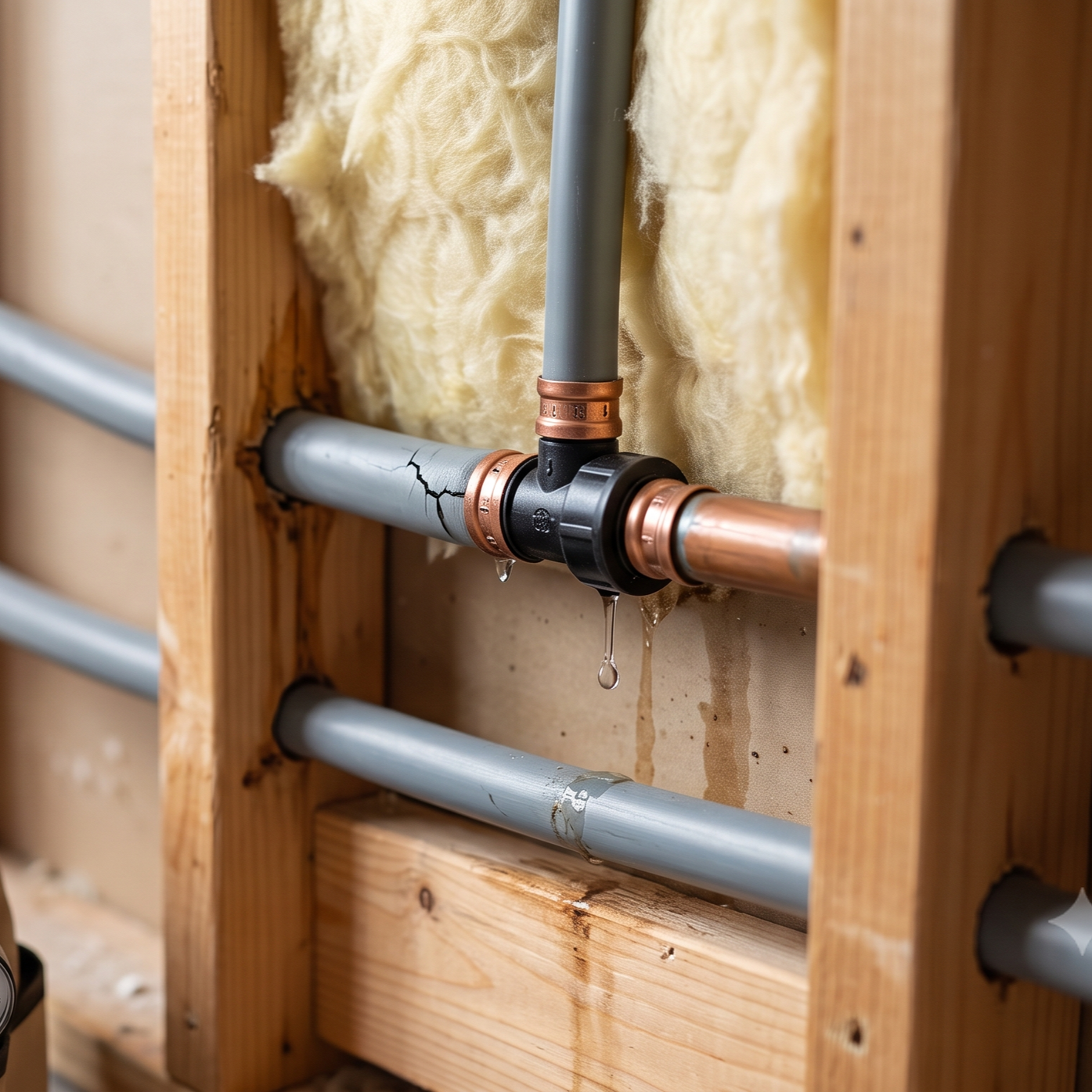
Quick Answer: Polybutylene is a gray (sometimes blue or black) flexible plastic water pipe installed in millions of homes from the late 1970s to the mid-1990s. Chlorine in treated water slowly breaks it down from the inside, so it turns brittle and cracks, usually starting at the fittings. There is no reliable repair, so the accepted fix is to repipe the home with copper or PEX.
If your home was built between the late 1970s and the mid-1990s, there is a real chance the water lines running through your walls are made of a material the plumbing trade quietly walked away from decades ago. It looks harmless. It has usually been held for years. And that is exactly the problem, because polybutylene pipe tends to give no warning before it fails.
Understanding how this pipe went from a builder's favorite to a material no one installs anymore explains why plumbers treat it the way they do and why finding it in your home is worth taking seriously rather than shrugging it off.
The Cheap Alternative That Looked Like a Win
In the late 1970s, copper was the standard for residential water supply, and copper was not cheap. It also took skill and time to install, since every joint had to be cut, cleaned, fluxed, and soldered by hand. Polybutylene arrived as an answer to all of that. It was a flexible gray plastic that could be snaked through framing in long runs, joined with simple fittings, and installed in a fraction of the time. Material cost was lower, and labor was faster, so builders adopted it quickly, especially in tract housing, manufactured homes, and additions.
For roughly two decades, it went into millions of homes across the country. Across the country, plenty of houses built in that window carry it, sitting alongside older galvanized steel from earlier builds. On the day it was installed, it did the job. The trouble was baked into the chemistry, and it took years of ordinary use to show up.
How Ordinary Tap Water Turns the Pipe Brittle
Here is the mechanism that matters. Municipal water is treated to keep it safe to drink, and part of that treatment involves the use of chlorine and other oxidizing agents. Those same chemicals are hard on polybutylene. Every time treated water sits in or flows through the pipe, the oxidants react with the plastic at a molecular level. Over the years, that slow reaction degrades the material.
Think of it the way sunlight breaks down a cheap plastic bucket left outside. The bucket looks fine for a long time, then one day you pick it up, and the plastic has gone chalky and cracks in your hand. Polybutylene ages the same way, except the aging occurs on the inside surface where water contacts the wall, out of sight inside your walls.
As the reaction progresses, the pipe loses its flexibility and grows brittle. Tiny flakes are shed from the inner wall, and micro-cracks form and spread. The pipe can look completely normal on the outside while quietly failing from within. That gap between how it looks and what is actually happening to it is why polybutylene earned its reputation. A section can hold at full pressure right up until the moment it splits, and the first sign a homeowner gets is often water on the floor.
The Fittings Fail First
The pipe itself is only half the story. Polybutylene systems were commonly assembled with acetal fittings, meaning the connectors at joints and elbows were also plastic. Those acetal fittings are frequently the first thing to go.
There are a couple of reasons. Fittings concentrate stress where the pipe is gripped and where flow direction changes, and the same oxidants that attack the pipe attack the plastic connectors too. So the weakest points in the whole system tend to be the connections rather than the middle of a straight run. That has a practical consequence for homeowners. Leaks show up at joints, often tucked behind walls, under sinks, or above ceilings where nobody is looking, which is part of why they can run undetected until there is real damage.
How to Tell If You Have It
You can often spot polybutylene yourself with a quick look at exposed plumbing. Look for a flexible plastic pipe, usually gray, though it also comes in blue and sometimes black, with a diameter of roughly half an inch to one inch. The most reliable places to check are where lines are exposed: at the water heater, at the main shutoff valve where water enters the house, and at the meter. Many runs carry a stamp along the pipe reading PB2110, which is a strong tip-off.
The material it is most easily confused with is PEX, and the difference matters a great deal. PEX is the modern flexible pipe used in homes today, and it is a different type of plastic that holds up well. Copper is a rigid metal and hard to mistake for either. If you find a gray flexible pipe with plastic fittings feeding your water heater, that combination is worth having a licensed plumber confirm rather than guessing.
Why It Matters Beyond the Leak
A single leak behind a wall is bad enough, but the deeper issue is what a polybutylene failure can do. Because the pipe can burst rather than just weep, a failure can release water at full pressure and flood a room or an entire floor before anyone shuts off the supply. Water damage of that kind reaches drywall, flooring, cabinetry, and anything stored below.
The material is no longer accepted for new potable water lines, which is a signal in itself. It also travels with the house. When a home changes hands, the presence of polybutylene is something buyers and their inspectors tend to flag, and it can also come up in conversations about coverage. None of that is a reason to panic, but it is a reason to know what you have and to have a plan rather than being surprised by it later.
Why There Is No Real Repair
The instinct when a pipe leaks is to patch the leak, and with polybutylene, that instinct leads people astray. The reason makes sense once you understand the mechanism. The failure is not a defect in one spot. The entire system has been aging under the same conditions for the same number of years, so if one fitting has degraded enough to leak, the rest of the pipe and its fittings are somewhere along the same path. Fixing one leak does not address the material that produced it. It just relocates the next failure to wherever the system is weakest now.
That is why the accepted answer is repiping rather than repair. A repipe replaces the polybutylene throughout the home with a material that holds up: usually copper or modern PEX. It is a real project, and it is a licensed plumber job for good reason, since it involves opening walls, tying into the water heater and fixtures, and getting the work done to code. Done once, it resolves the problem for good instead of chasing it around the house.
What to Do If You Suspect Polybutylene
The sensible first step is identification. Have the pipe been looked at and confirmed and get an honest assessment of how the system is laid out and how far the polybutylene runs. From there, the right move is to plan a repipe rather than wait. This is a when, not an if. The material degrades on its own timeline regardless of how gentle you are on the plumbing, and the goal is to replace it on your schedule rather than after a burst pipe sets your schedule for you.
If you are not sure what you are looking at, or you found a gray flexible pipe at the water heater and want to know for certain, a licensed plumber can identify it, explain your options, and walk you through what a repipe would involve for your specific home.
Frequently Asked Questions
Look for a gray, sometimes blue or black, flexible plastic pipe about a half to one inch across coming into the water heater, at the main shutoff, or at the meter, often stamped "PB2110." One common brand name to watch for is Quest. It is worth remembering that polybutylene was also used for the underground service line running from the water meter into the house, not just for the pipe inside your walls, so a home can carry it in both places.
Chlorine and other oxidants in treated water react with the plastic and its acetal fittings over the years, making the pipe brittle and prone to flaking and micro-cracking from the inside. Hot-water lines degrade noticeably faster than cold ones because heat speeds the reaction, and homes on municipal water with higher chlorine or chloramine levels see the embrittlement arrive sooner. That is why a length can burst without warning, even though the outside still looks intact.
No. PEX is a modern cross-linked polyethylene pipe that resists chlorine and is used safely in homes today, while polybutylene is an older, different plastic that degrades over time. Side by side, polybutylene tends to feel softer and reads a duller gray, whereas PEX is printed with its type (PEX-A, PEX-B, or PEX-C) and a pressure and temperature rating stamp. Reading the printing along the pipe is often the fastest way to tell the two apart.
The original acetal (plastic) fittings joined with crimp or clamp rings are the common failure point, so leaks tend to show up at connections and behind walls rather than in the middle of a straight run. Even in homes where copper or brass insert fittings were used instead, the failure just migrates into the pipe wall itself, since the material is degrading everywhere at once. That hidden location is a big part of why these leaks are so hard to catch before they flood something.
There is no reliable long-term repair because the whole system is degrading at once; patching a single leak just moves the next failure elsewhere. A repipe replaces the piping entirely, either as a PEX home-run manifold, where each fixture has its own dedicated line back to a central manifold, or as a trunk-and-branch layout that mirrors traditional plumbing. The work is usually run from the attic or crawlspace to keep wall damage to a minimum.
Often yes. Because of its failure history, some insurers will decline to write a new policy or renew an existing one on a home with polybutylene until it has been repiped, and buyers and their inspectors tend to flag it during a sale. Identifying and addressing it protects both the home itself and its resale value, which is one more reason to confirm what you have sooner rather than later.
Have your pipes identified and get a straight answer on repiping — protect your home before a hidden line lets go. East Coast Plumbing serves Barto, Boyertown, Pottstown, and the surrounding area. Call (610) 904-9069.
