
What's in a Pre-Lease Plumbing Inspection — and Why It Protects You
Your new tenant is three weeks in and already calling about the kitchen sink. Drains slow. Second bathroom has no hot water. There's a soft spot in the floor next to the toilet. None of it showed up on your walkthrough. None of it was in the photos.
A landlord walking a rental unit before turnover can spot a dripping faucet or a water stain on the ceiling. That's not the same thing as a plumbing inspection. A licensed plumber looks at what's behind the walls and underneath the floors — the actual pressure readings, the drain flow rates, the shut-off valves that haven't moved in 15 years, the water heater sitting at year eleven in a hard-water county. The gap between those two things is where the first-90-days calls come from.
The difference between a general inspection and a plumbing-specific inspection
A general pre-lease walkthrough is visual. Run the faucets. Flush the toilets. Look under the sinks. It catches the obvious problems. It misses the ones that cost real money.
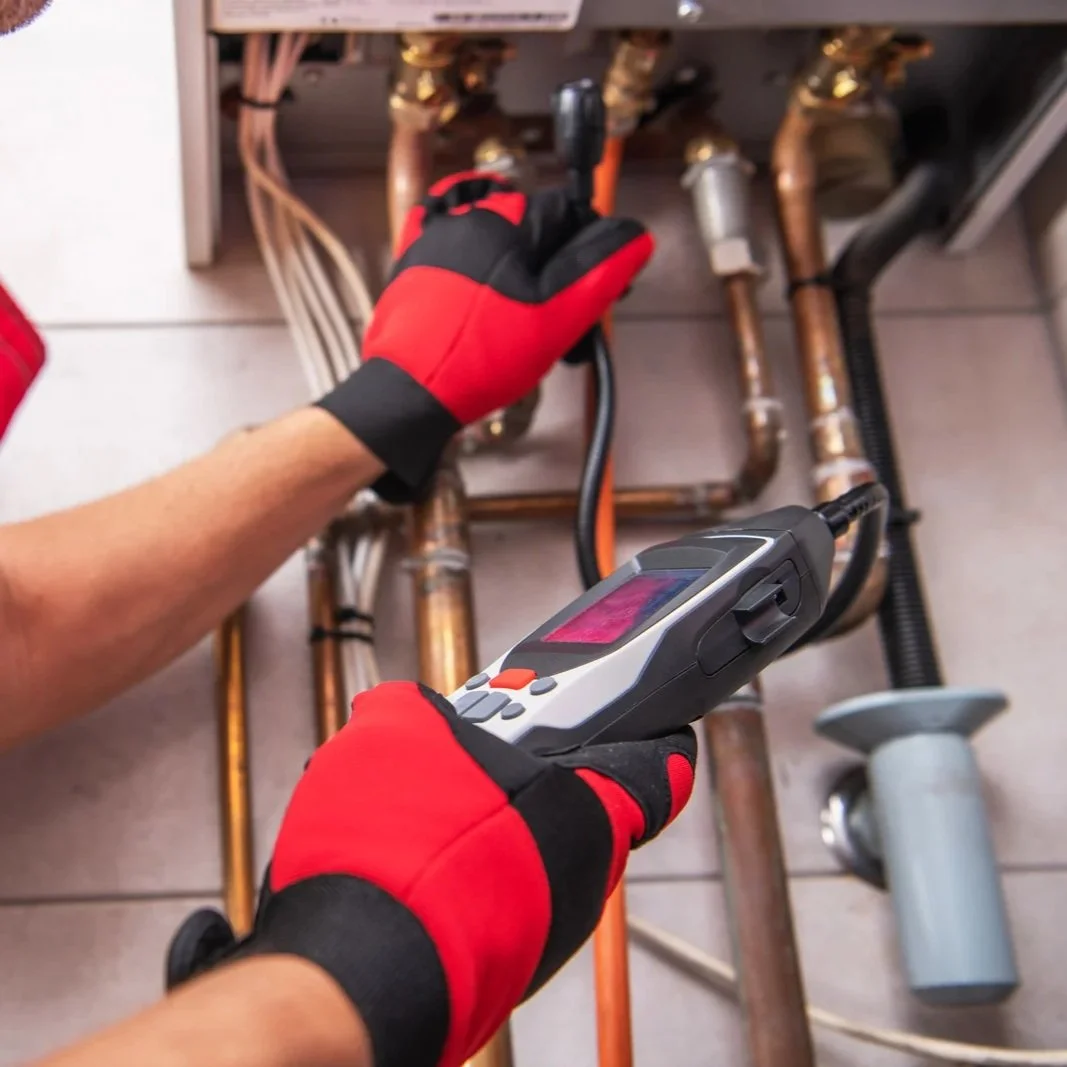
A dedicated plumbing inspection is functional testing and condition assessment. A plumber checks every fixture under actual flow, records water pressure at multiple points, times the drain rate at every basin, and evaluates the systems most likely to fail: the water heater, the main shut-off, the supply lines behind aging walls. For older properties — and there's a lot of older rental stock in Berks and Montgomery Counties — the assessment also covers what the pipes are actually made of, because galvanized steel, cast iron, and clay tile all age differently.
A standard inspection takes one to two hours for a single residential unit. Multi-unit buildings with separate utility areas take longer.
Water pressure and supply line checks
First thing a plumber does is test the water pressure. Normal residential range is 40 to 80 PSI. Too low and tenants complain about the shower. Too high — anything above 80 PSI — and every supply hose, toilet fill valve, and washing machine line is working harder than it's rated for. A pressure-reducing valve handles high pressure. Low pressure requires tracing where it drops off.
Low pressure at a single fixture usually indicates a clogged aerator or a partially closed valve. Low pressure throughout the whole unit is a different problem. Properties with original galvanized steel supply lines — common in pre-1980 rental housing across both counties — develop scale buildup on the pipe interior over decades. Think of it like the inside of a teakettle that's never been descaled. Water still moves through, just slower every year, until one section finally restricts flow enough to notice. Testing pressure at the main and at individual fixture points to where the restriction is.
Supply lines under sinks and behind toilets get checked, too. Braided stainless supply hoses are standard now, but older units sometimes still have the original rubber-core lines. They fail without warning. Any line showing age, corrosion, or mineral buildup at the fittings gets flagged.
Drain and sewer system evaluation
Slow drains are the most common complaint from new tenants. Most of the time, the restriction is in the unit itself — soap and hair accumulation in a branch line, grease buildup in the kitchen drain. But slow drains throughout an entire unit, or a drain that runs slow in a freshly cleaned property, usually point to something further down.
A plumber fills each fixture and times the drain rate. Kitchen sinks and bathroom basins should clear in 15 to 30 seconds. A sluggish drain gets probed — P-trap first, then branch line, then deeper in the stack. For older properties or buildings with a history of backups, a camera inspection of the lateral sewer line adds certainty that the visual check can't give you. Clay-tile sewer lines in established neighborhoods crack at the joints as they age. Tree roots find those cracks, push through, and fan out inside the pipe into a mesh that catches everything until the line backs up. A camera shows you what's in that lateral before a new tenant moves in, not during their first bad rainstorm.
And check the P-traps. A dry, cracked, or missing P-trap lets sewer gas move back up into the unit. Hydrogen sulfide. That smell like rotten eggs from a basement floor drain or a rarely used bathroom isn't a vague odor problem — it's a dry trap, and it's a simple fix before occupancy.
Water heater condition and capacity
The water heater gets a dedicated look. Age, anode rod condition if accessible, the temperature and pressure relief valve, the supply and discharge connections, and flue venting on gas-fired units.
Age matters more than most people account for. A water heater's typical service life is 8 to 12 years — and that window shrinks in hard-water areas. Berks County water and much of Montgomery County register high dissolved calcium and magnesium, which accelerates sediment buildup inside the tank. A unit at year eleven that's never been flushed might last another two years. Or it might fail the first week of January when demand spikes and the sediment layer finally insulates the burner enough to trigger a shutdown. Flagging it before a tenant signs gives the owner options. Not flagging it gives the owner an emergency.
The T&P relief valve is non-negotiable. One that won't open or drips constantly gets replaced — not monitored. Gas-fired units also need a flue check. A blocked or disconnected flue means carbon monoxide in the living space.
Shut-off valves and fixture controls
Every plumbing system has a hierarchy of shut-offs: the main, the branch lines, and the individual fixture valves under sinks and behind toilets. In theory, any plumber or tenant can isolate a leak in seconds by turning the right valve. In practice, a valve that hasn't moved in 20 years may not turn at all — or it leaks past the packing when it finally does, which means you've got two problems instead of one.
A thorough pre-lease inspection includes operating every shut-off valve in the unit. Valves that won't turn freely, that leak when operated, or that show heavy corrosion at the stem get tagged for replacement. It's low-cost maintenance that prevents a manageable leak from becoming a water-damage claim because nobody could get the valve to close.
The main shut-off location gets confirmed and written into the inspection notes. Tenants should know where it is on day one. That knowledge matters when something goes wrong at 11 p.m.
What plumbers look for in older rental buildings
Properties built before 1980 have specific plumbing conditions a general inspection won't surface.
Original galvanized steel supply pipes corrode from the inside. The exterior can look acceptable while the interior diameter has narrowed by half from scale. The signs: low pressure at upper-floor fixtures, rust-tinged water on first draw in the morning. If galvanized supply piping runs throughout the unit, a plumber will document it and have a realistic conversation about the repair timeline. That conversation is better to have before a tenant is living there.
Cast iron drain stacks in older multi-family buildings generally hold up, but horizontal branch lines feeding into them were sometimes installed in lead in pre-1986 properties. The connections where dissimilar metals meet — copper against galvanized at an older fitting — are also inspection points, because galvanic corrosion at those joints accelerates failure.
Outdoor hose bibs get checked too. A bib that wasn't properly winterized the previous fall can have a cracked chamber that's invisible until someone turns the spigot on in spring.
Red flags that warrant repair before occupancy
Not every finding requires immediate action. But some conditions are better addressed before a tenant moves in than after.
Slow drains throughout the unit — not just one fixture — indicate a main line restriction. It doesn't improve on its own.
Evidence of prior water damage under sink cabinets, on subfloors near toilets, or on ceilings directly below bathrooms suggests a leak whose source hasn't been fixed. New flooring or fresh paint over water staining can make a unit look remediated when the problem is still there.
A water heater over 12 years old in a hard-water area is a real liability. So is any supply line showing visible corrosion or mineral buildup at the fittings. Those fail without warning and typically take the cabinet floor or the subfloor with them.
Documenting these findings before a tenant signs creates a clear record of the property's condition on a specific date. When something fails mid-lease, that record shows whether the failure was a new development or a problem the property already had — and that difference shapes every security deposit dispute and maintenance decision that follows.
Quick-Reference: What a Pre-Lease Plumbing Inspection Covers
| System | What Gets Checked |
|---|---|
| Water pressure | Tested at main and at individual fixtures; PRV condition if present |
| Supply lines | Age, material, condition at fittings; corrosion and mineral buildup |
| Shut-off valves | Main, branch, and fixture valves — operability and leak-past condition |
| Drains | Flow rate at each fixture; P-trap condition; branch line obstruction |
| Main sewer lateral | Visual assessment; camera inspection if history of backup or older clay-tile line |
| Water heater | Age, sediment buildup, T&P valve, flue/venting, supply connections |
| Fixtures | Faucets, toilets, shower valves, garbage disposal — function under flow |
| Exterior | Hose bibs, winterization condition, outdoor supply lines |
| Older pipe materials | Galvanized supply, cast-iron drain, dissimilar-metal connections |
Frequently Asked Questions
A general home inspection covers the whole property — structure, roof, electrical, HVAC, and plumbing — typically in two to three hours. The plumbing portion is a visual and functional spot check. A dedicated pre-lease plumbing inspection goes deeper: actual pressure readings, drain flow testing at every fixture, pipe material evaluation, and a close look at systems most likely to generate calls from tenants.
A property manager can do a thorough general walkthrough. For properties with older plumbing, a history of maintenance calls, or aging infrastructure like galvanized supply pipes or clay-tile sewer lines, a licensed plumber brings diagnostic tools and code knowledge that a visual check can't replicate. The inspection cost is usually far less than a single emergency service call.
A typical inspection for a single residential rental unit runs $150 to $350, depending on property size and scope. Older properties or those with basements and multiple bathrooms may run higher. A sewer camera inspection, if needed, is typically priced separately.
At minimum, a thorough walkthrough. But for properties older than 1980, units with a history of maintenance calls, or buildings whose plumbing systems haven't been professionally evaluated in several years, a dedicated inspection before the next tenant signs makes sense. It prevents the most common first-90-days complaints and gives you a documented baseline.
Pre-existing conditions that weren't disclosed — a slow drain, a failing supply line, a water heater on borrowed time — can become liability questions if they weren't documented before occupancy. A pre-lease inspection creates a clear record tied to a specific date. When something fails mid-lease, that record shows whether it was a new development or a problem the property already had.
For a standard single-family rental or apartment unit, expect one to two hours. Multi-unit buildings, properties with basement utilities and separate mechanical rooms, or older buildings with complex systems take longer. A sewer scope inspection adds time depending on line length and access conditions.
A pre-lease plumbing inspection catches the problems that generate first-90-days calls, and it creates a written baseline that holds up when something fails later in the tenancy. For any rental with older plumbing, that baseline is worth having before the lease is signed.
