
The bathroom tile has been cold all winter, so the warm patch near the toilet just feels like a relief. You notice it in February, barefoot before the shower, and figure the pipes must be running warmer. Then the water bill comes in forty dollars higher than January. Then sixty dollars higher the month after that. By the time the laminate floor near the hallway closet starts to bubble up at the edges, you've got a slab leak that's been running for at least six weeks.
Most people find out this way — through the slow accumulation of things that didn't add up until they did. The water bill that climbs without explanation. The soft spot under the carpet. The faint sound of water moving when the house is quiet at 2 a.m.
A slab leak is a break in one of the supply pipes running beneath your concrete foundation. In most homes built on a slab, both the hot and cold water lines travel through or directly under the concrete before branching up into the house. When a pipe develops a crack or a pinhole, water escapes into the ground — or, if enough pressure builds, up through the slab and into your flooring.
| Warning Sign | What It May Mean |
|---|---|
| Water bill rising month over month | Water escaping a pressurized line below the slab |
| Warm or hot patch on a floor that shouldn't be warm | Hot water line leaking beneath the concrete |
| Sound of running water when all fixtures are off | Active leak below the foundation |
| Damp carpet or bubbling laminate with no spill source | Water seeping up through the slab |
| Drop in water pressure throughout the house | Line losing volume before it reaches your fixtures |
| Musty smell coming from floors or baseboards | Mold growing in the subfloor or under flooring |
| Cracks appearing in interior walls or floors | Water-saturated soil shifting under the foundation |
| Doors or windows that suddenly stop closing properly | Foundation movement caused by soil erosion below |
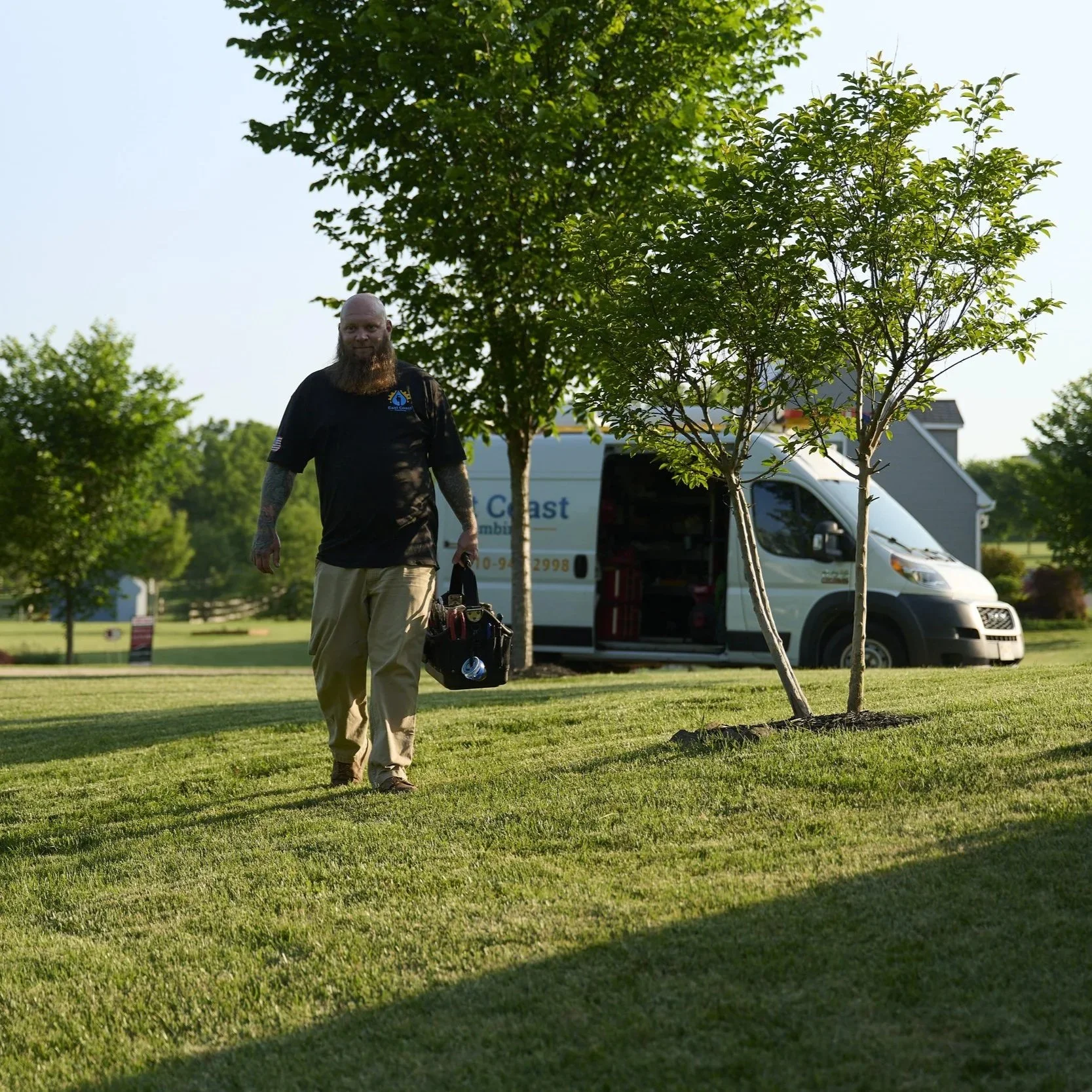
What is actually happening under your concrete
Your home's slab is poured over a network of pipes, and those pipes sit in direct contact with soil, gravel, and concrete. That's a rough environment for any metal. Copper is the most common pipe material in homes built between the 1960s and early 2000s, and it handles heat and pressure well — until it doesn't.
Hard water is the main accelerant. Water high in minerals reacts with copper over time, thinning the pipe wall from the inside out until a pinhole opens. It's a slow process — often ten to twenty years before a pipe fails. Many older homes in this region still have their original copper lines under the slab. And in Berks and Montgomery Counties, where hard water is the norm, those copper walls have been corroding for decades.
High water pressure is the other major driver. When pressure runs consistently above 80 PSI, it creates a constant expansion-and-contraction cycle inside the pipe. The pipe pushes against the surrounding concrete. Concrete pushes back. That friction wears through the copper like a ring against a brick wall — slowly, invisibly, and then all at once. A pipe correctly installed in 1978 can develop a leak simply because it's been working against the same stone for nearly five decades.
Ground movement adds to this. Freeze-thaw cycles shift the soil. Soil that expands and contracts flexes the slab, and a slab that flexes puts lateral stress on pipes that were never designed to bend.
Your water bill is usually the first signal
A slab leak doesn't waste water the way a dripping faucet does. Pressurized supply lines push water out continuously, and even a small breach can lose hundreds of gallons per day. You're paying for every drop.
Pull out the last three months of water bills. If usage has climbed steadily without any change in household habits — no extra laundry, no irrigation system running, no guests staying — that's worth investigating. A ten to fifteen percent increase month over month is meaningful. A forty to sixty dollar jump on a house where nothing changed is almost always a leak somewhere in the system.
The water meter test confirms whether a leak is active. Turn off every fixture, appliance, and shutoff valve in the house. Go outside and watch the meter. If the dial is moving with everything off, water is escaping somewhere. That could be a dripping toilet — so rule that out first — but if you've already checked the fixtures and everything is off, a moving meter points to a supply line you can't see.
Warm floors and what pets notice before you do
A slab leak in a hot water line warms the concrete above it. Concrete conducts heat slowly, but an ongoing leak will eventually push warmth up through tile, hardwood, or vinyl. Walk across the floor barefoot and you might feel a patch that's noticeably warmer than everything around it. It doesn't feel alarming — it feels comfortable, which is exactly why it gets ignored.
Dogs and cats figure this out faster than most homeowners. Animals are creatures of habit. They have a favorite corner of the bathroom floor, a patch of tile they return to every afternoon. When a pet suddenly develops a new favorite spot on a warm patch near where the water heater supply runs, it's not coincidence. That's the leak.
But this sign is specific to hot water line failures. A cold line slab leak won't warm the floor at all. The absence of warm spots doesn't mean the slab is dry — cold water line leaks show up through the other indicators instead: rising water bill, moisture in the flooring, pressure drops throughout the house.
The sound of water moving when nothing is on
Turn everything off. The dishwasher, the refrigerator ice maker, the washing machine. Go to the lowest floor of the house late at night and listen.
A slab leak sometimes makes an audible sound — a hiss, a faint whoosh, occasionally a soft rushing noise that's hard to locate. The sound travels through the concrete and can seem to come from inside the walls rather than the floor, which is why people dismiss it. The tell is that it keeps going even after every water-using appliance and fixture is off. Rule out the toilets first — a slow-filling tank sounds similar. But if everything's off and you still hear it, call a plumber that day. Water is under pressure somewhere below you, and the longer it runs, the further the damage spreads.
Damp carpet, bubbling floors, and what they're actually telling you
Moisture that starts below the slab has to travel through several inches of concrete before it reaches your flooring. That doesn't happen overnight. By the time you notice damp carpet in a room with no plumbing overhead, or laminate that's lifting at the seams, the leak has typically been running for weeks.
Carpet hides it well. The padding underneath absorbs a significant amount of water before the surface feels wet. You might notice a soft or spongy area underfoot well before you feel actual moisture. Don't dismiss that. Soft spots in carpet on a ground-level floor, especially in rooms where supply lines run close to the surface, are telling you something.
Hardwood and engineered wood buckle and cup at the edges when moisture comes from below. Think of the way a book swells when the bottom half gets wet — the fibers absorb water unevenly, and the board bends toward the drier side. A floor that was flat last year and now has a ridge along one plank isn't settling. It's responding to something underneath.
Cracks in walls and doors that stop fitting
Water saturating the soil beneath your slab doesn't stay put. It erodes the supporting soil, creating voids. A slab foundation distributes the weight of the house evenly, and a void beneath one section changes that distribution. The slab flexes. The house settles unevenly.
The first sign isn't usually a crack in the floor. It's a door that used to close smoothly and now catches at the latch. A window that was always easy to open and now drags. These happen because the door frame has shifted slightly as the foundation moved beneath it. Vertical cracks in drywall near interior doorframes, diagonal cracks running from window corners — these are signatures of differential settlement.
A single small crack in drywall can be cosmetic. A crack that extends diagonally from a window corner and reappears after you patch it — that's structural movement, and the source needs to be identified before anything else.
How a plumber actually finds the leak
Professional slab leak detection doesn't mean tearing up your floor to look around. A licensed plumber uses electronic listening equipment, pressure testing, and thermal imaging to locate the breach without guesswork.
Electronic listening devices amplify the sound of water escaping under pressure — even through several inches of concrete. The technician moves along the floor listening for the frequency signature of an escaping line. Thermal cameras show heat patterns through the flooring and confirm the location of a hot water leak. Pressure testing isolates sections of the plumbing system to verify which line is losing volume.
Camera inspection handles sewer line slab leaks. These are different from supply line failures and produce different symptoms: slow drains throughout the house and sewage odors at the lower level rather than water bill spikes and wet flooring.
Once the location is confirmed, repair options include a spot repair through the slab at the breach point, a reroute that runs a new line through the walls, or full-line repiping if the copper has deteriorated past a single failure. Older homes with original copper under the slab often get a reroute, because a pipe that failed in one spot is usually in similar condition everywhere else on that run.
What happens if you wait
A slab leak that's left to run doesn't stabilize. The breach grows. Soil erosion continues. Every week you wait, the water damage spreads further into the subfloor, the mold gets more established, and the foundation movement increases. A repair that would have cost a few thousand dollars at the point of discovery becomes a repair plus a floor replacement plus a mold remediation project.
The water isn't slowing down either. Pressurized supply lines push at the same rate whether the leak is being fixed or not. An unrepaired slab leak wastes tens of thousands of gallons per year. You pay for every gallon until someone stops it.
Frequently Asked Questions
No. A pressurized water line won't seal on its own. The breach may shift slightly as soil settles, but the pipe is damaged and will keep leaking until it's repaired or replaced. There is no version of this that resolves without someone fixing it.
A slab leak affects supply lines under the foundation. An in-wall leak involves supply lines inside the structure. Both show up as unexplained water bill increases and moisture somewhere in the house. The difference is location: damp carpet or buckling floors on the ground level without plumbing overhead points under the slab. Wet drywall, ceiling staining, or moisture tracking down from an upper floor points to an in-wall or ceiling leak. A plumber can separate the two quickly with pressure testing.
It depends on the pipe size and flow rate. A small pinhole may seep for months before flooring shows obvious damage. A larger breach can saturate the subfloor within days. Mold establishes in wet subfloor within 48 to 72 hours in warm conditions. The longer you wait after noticing symptoms, the more the repair scope expands.
Most policies cover sudden, accidental water damage from a slab leak — meaning they'll help pay for flooring replacement, drywall repair, and mold remediation. Fewer cover the actual pipe repair itself. Coverage varies by insurer and policy. Contact your agent before authorizing any repairs, and document everything with photos first.
Yes. Homes built before 1990 are significantly more likely to have aging copper supply lines under the slab. Hard water in Berks and Montgomery Counties has been reacting with those copper walls for forty or more years in many of these houses. That's not a reason to panic — most of those pipes are still intact — but it is a reason to pay close attention to the early warning signs.
You can't eliminate it entirely. But a pressure regulator keeps water pressure from running above 80 PSI, which reduces the constant stress on pipe walls. A water softener slows the mineral corrosion that thins copper over time. Scheduling a plumbing inspection every few years on a home built before 1990 catches small problems before they become slab-deep ones. And if your house still has its original supply lines under the slab, it's worth asking a licensed plumber what realistic condition those pipes are in at this point.
Catching a slab leak early comes down to noticing things that don't have an obvious explanation — the water bill that crept up, the floor that feels soft, the door that used to swing freely. None of these alone is definitive. All of them together, and the pattern is hard to miss. If you've noticed more than one of these signs, have a plumber run a pressure test before the problem progresses further into the structure.
