
You step into the bathroom, and the tile feels damp. Look down and there is a thin ring of water circling the toilet base. It wasn't there last night.
Where it's coming from matters more than you might think. Some toilet base leaks are a $5 fix you knock out in an afternoon. Others are quietly rotting the subfloor beneath your feet, and you won't know it until the floor starts to feel soft. Getting that distinction right starts with watching one thing.
Quick Reference: Common Causes at a Glance
| Cause | When Water Appears | Floor Location |
|---|---|---|
| Failed wax ring | After each flush | At toilet base |
| Loose tee bolts | After each flush | At toilet base |
| Cracked toilet base | After each flush | At toilet base |
| Cracked or low flange | After each flush | At toilet base |
| Condensation | Continuously (humid days) | Under tank, runs forward |
| Supply line drip | Continuously | Back of toilet base |
The flush test: your first diagnostic step
Grab some paper towels and dry the floor completely — around the base, around the tank, all of it. Then wait.
If the floor stays dry until you flush, and then water shows up again, the leak is flush-related. Water is leaving the drain path and going sideways instead of straight down. That's a specific problem with a specific set of causes. But if the floor is damp regardless of whether you flush, you're looking at something different entirely — condensation, or a drip from the supply line.
One observation, and you've already cut the list in half before touching anything.
What a failed wax ring actually does
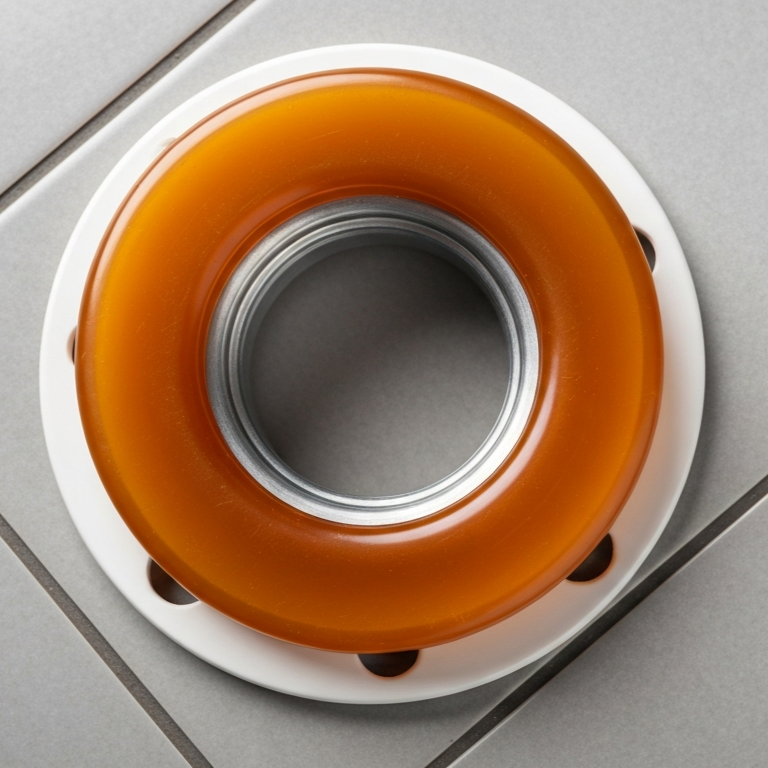
Most of the time, standing water at the base comes back to one thing: the wax ring. That ring sits between the toilet's horn — the discharge outlet on the underside — and the drain flange set into the floor. Press the toilet down during installation, and the wax compresses into a seal. That's it. One shot.
It doesn't flex. It doesn't recover. If the toilet moves — even a subtle rock from someone shifting their weight, or seasonal movement in an older home's subfloor — the wax gets worked away from the seal line. Eventually a gap opens. The gap might be tiny. You could flush twenty times before water appears on the floor. But it's coming.
Replacing the wax ring isn't a complicated job. The seal itself costs a few dollars. You'll disconnect the supply line, pull the mounting nuts, lift the toilet off the flange, scrape both surfaces clean, set a new ring, and put everything back. Two hours of work, and it's easier with two people for the lift.
One thing to know before you start: if the flange under the toilet is cracked, corroded, or sitting below floor level, a new wax ring still won't seal. That's worth checking first — it's covered a few sections down.
When the tee bolts are the real problem
Two bolts — tee bolts, or closet bolts — hold the toilet down to the floor flange. Plastic caps cover them at the base on both sides. When those bolts work loose, the toilet shifts with every use. You'd barely feel it. But that small movement does the same damage to the wax ring as a toilet that visibly rocks.
Worth checking before you pull anything apart. Pop the caps off (they pry up easily), look at the bolt condition, and try to wiggle the toilet side to side. Any movement at all means the bolts need tightening. If they spin without catching, they're stripped and need replacing — which means pulling the toilet to access the flange anyway.
In pre-1980 homes, the original closet bolts were usually brass. Brass handles damp conditions better than zinc-coated steel, but decades of sewer gas exposure will pit and weaken any metal eventually. If they look old, replace them while you're already in there. The bolts cost almost nothing, and it's one fewer thing to fail later.
A cracked toilet base — harder to spot than it looks
Porcelain looks indestructible. But a toilet that's been bumped, shifted after installation, or had something heavy dropped nearby can develop a hairline crack at the base or near the horn. Those cracks aren't always obvious fracture lines. Sometimes it's a faint discoloration in the glaze, or a subtle step in the surface you'd only catch with your fingers.
The tell is location. Water shows up directly beneath the toilet during a flush but doesn't trail toward the supply line or tank. Run your hand along the dry base and feel for roughness or any irregularity in the surface. If you can't find it visually, a dye test works — a few drops of food coloring in the tank, then a flush. If colored water appears at the base, the crack's in the bowl or horn, not the seal.
And here's the hard part: a cracked toilet base can't be fixed. Porcelain repair compounds exist, but none of them hold up to repeated flush pressure over time. The toilet needs to be replaced.
The toilet flange — why a new wax ring sometimes doesn't fix it
The flange is the fitting that sits in the floor and connects the toilet's drain path to the pipe below. It's what the wax ring seals against. Most flanges are PVC or cast iron. In pre-1980 homes across eastern Pennsylvania, cast iron is common — and those flanges have had decades to corrode.
This is one of the most often-missed reasons a base leak keeps coming back. A plumber pulls the toilet, swaps the wax ring, puts everything back. A month later it leaks again. The wax ring wasn't the problem. The flange was. A cracked segment, a missing section, enough corrosion that the ring has nothing solid to seal against — any of those make a new wax ring useless.
There's a second flange issue that shows up specifically in older homes where flooring has been added over the years. Original hardwood, then underlayment, then tile or vinyl — and by the time that's all stacked up, the flange can end up sitting a half-inch or more below the finished floor. A standard wax ring can't bridge that gap. You need either a flange extender or a wax ring with an extra-thick profile built for exactly this situation. Set a standard ring on a below-grade flange and it will leak again.
Think of it like trying to seal a jar lid when the rim is chipped — the gasket can't do its job if the surface it seats against isn't intact.
Condensation — when the floor is wet but nothing's leaking
Not every wet floor around a toilet is a plumbing problem. On humid summer days, cold water in the tank turns the exterior into a cold surface. Warm air hits it and condenses into liquid. That moisture runs down the side of the tank and drips onto the floor, right next to the base.
Here's how you tell it apart from a real leak. Condensation shows up regardless of whether you flush. It collects under the tank and runs forward. And it gets worse on muggy days or in bathrooms without much ventilation. A wax ring or base crack leak shows up specifically after flushing — water at the front or sides of the base, tied closely to each flush cycle.
If condensation is the issue, the fix is usually one of a few things: insulate the inside of the tank to eliminate the cold surface, improve the bathroom's ventilation, or fix the running toilet that's constantly pulling cold water into the tank.
The supply line and shut-off valve
Before touching the toilet, check the supply line. That's the braided hose running from the wall shut-off valve to the bottom of the tank. A pinhole in the hose, or a loose connection at either end, can send a slow drip down the line to the floor. It pools right next to the base and looks exactly like a base leak.
The shut-off valve itself can weep too — at the packing nut, or where the valve body connects to the wall. That kind of drip keeps the floor damp all the time, without the flush-correlation you'd see from a wax ring failure.
Test it yourself before anything else. Hold a dry paper towel against each fitting for a few seconds. If it comes away wet, you have found your source without pulling a single bolt.
What happens to the subfloor when a base leak goes unrepaired
A slow toilet base leak doesn't keep the subfloor constantly wet — it cycles it. Wet during each flush, then drying out between uses. And that cycling is worse for wood than a constant flood. Mold and rot get going faster in material that gets wet repeatedly and then has time to start drying between cycles.
In a house with tile over a wood subfloor, you can't see this happening. The tile stays solid. Below it, the OSB or plywood is softening. By the time the floor feels spongy near the base, there's already real material to replace.
Watch for these signs: the floor feels soft underfoot near the toilet, grout lines around the base have cracked or shifted, the toilet feels slightly unstable even after you tighten the bolts, or there's a musty smell in the bathroom that doesn't go away. Any one of those is worth taking seriously.
The cost gap between catching it early and catching it late is real. A wax ring replacement with bolt inspection runs $150–$350. Subfloor repair beneath a toilet adds $400–$800 depending on how far the damage spread. If the rot has reached the joists underneath, the scope grows from there.
Frequently Asked Questions
That pattern points to the wax ring, loose tee bolts, or a crack in the drain path. The flush creates pressure, and pressure finds any gap in the seal. Between flushes, there's nothing pushing water out — so if it only shows up after you flush, you're dealing with a drain-path problem, not a supply line or condensation issue.
Yes, if loose bolts are causing it. Pop the plastic caps off the base, tighten the nuts carefully — alternate left and right — until snug. Don't overtighten. Too much force and you'll crack the porcelain. If the bolts just spin without catching, they're stripped and need replacing, which means pulling the toilet to access the flange.
The ring itself costs under $10. Labor typically runs $100–$200. If the flange needs repair, or it's sitting below floor level and needs an extender, add more. A straightforward wax ring job comes to $150–$350 all in. Subfloor damage, if found, pushes that number up from there.
Dry the floor completely and watch what happens. Condensation comes back regardless of flushing, tends to appear under the tank and run forward, and gets worse on humid days. A drain-path leak shows up specifically at the base after each flush. If the toilet is also running constantly, that's making condensation worse by keeping cold water in the tank.
After removing the toilet, look at the ring fitting around the drain opening in the floor. A damaged flange might show a visible crack, a missing segment, or heavy corrosion through the cast iron. It can also sit visibly below floor level in homes where flooring has been layered over the years — it looks recessed rather than flush with the finished surface.
No. Water that comes out of the base during a flush has been through the drain path. That's sewage. And every flush is pushing more water into the subfloor. Cut down on use as much as possible and get it fixed. The longer it runs like this, the more floor you're replacing alongside the toilet repair.
The gap between a $250 wax ring job and a $1,000 subfloor repair is almost always just time. Water at the toilet base doesn't resolve on its own. The longer it sits, the more floor you're replacing
