
Slow Drains Whole House? The Hidden Cause Homeowners Miss
Quick Answer: One slow fixture usually means a clog in that fixture's own trap or branch line. When sinks, tubs, and toilets all drain slowly around the same time, the problem is almost always downstream where every drain joins together, in the main line or the vent that serves it. That shifts the fix from a plunger under one sink to diagnosing the shared plumbing.
A single slow sink is annoying but simple. Every drain in the house crawling at once is a different animal, and reading that difference correctly is what keeps you from wasting a weekend on the wrong drain.
One Slow Drain Versus the Whole House
Your home's drains are built like the branches of a tree. Each fixture has its own short branch line and a curved trap under it. Those branches feed into larger horizontal runs, and everything eventually empties into one main drain, sometimes called the building drain, that carries waste out to the sewer or septic tank.
That layout is the whole diagnosis in a nutshell. A clog on one branch only affects the fixtures on that branch. So if the upstairs bathroom sink is slow but the kitchen and the tub run fine, the blockage is local, usually hair, soap scum, or toothpaste built up in the trap or the first few feet of pipe.
The picture changes when problems show up everywhere at once. If the kitchen sink, both bathroom sinks, the tub, and the toilet all slow down over the same few days, no single trap can explain it. The common factor is the shared plumbing they all drain into, which points you at the main line or the vent system, not at any one fixture.
For a quick self-test, run water in a fixture on the lowest floor and one on an upper floor and watch each. If lower fixtures back up or gurgle while you drain an upper one, the trouble is likely in the shared main below everything rather than in any single fixture.
The Main Sewer Line, the Usual Suspect
When the whole house slows, the main sewer line is the first place an experienced plumber looks. It is the single pipe every drain depends on, so a partial blockage there throttles the entire system. The line is not fully closed; water still gets through, which is exactly why the symptom is slowness and gurgling rather than a hard backup.
A few things partially block a main line, and older homes tend to collect more than one.
Grease and scale: Kitchen grease is the classic offender. It pours down warm and liquid, then cools and hardens on the pipe wall a few feet downstream, catching food particles and coffee grounds until the opening narrows. In older cast-iron mains, the inside surface also grows a rough layer of rust and mineral scale, sometimes called tuberculation, that snags debris a smooth plastic pipe would pass. The pipe's effective diameter shrinks year after year.
Tree root intrusion: Roots are the reason a slow main so often has nothing to do with anything you flushed. Feeder roots sense moisture and grow toward the tiny seepage at old pipe joints, then push through and fan out inside the line into a mesh that catches paper and solids. Clay and older joint materials are especially vulnerable. Root intrusion is seasonal in its growth, but the mass stays year-round, so it slows drains in July as readily as in January.
A sagging, bellied line: Over decades, ground settles, and pipe supports fail, leaving a low spot where a horizontal run dips. This is called a belly. Water and solids pool in the dip instead of flowing straight through, and the standing waste steadily silts up until flow drops off. A belly is a physical defect in the pipe's slope, so it will not clear with a cleaning, which is why diagnosing it matters before anyone spends money snaking a line that is shaped wrong.
The Vent You Forgot You Have
Here is the part homeowners rarely picture. Your drains do not work by gravity alone. Every drain system is paired with a vent, a pipe that runs up through the roof and lets air into the plumbing behind the water. That air is what lets waste flow smoothly, the same reason a drink pours in glugs from a full can until you punch a second hole and it runs clean.
When the vent stack gets blocked, at the roof by a bird nest, leaves, or a dead animal, the drains lose their air supply. Water then has to pull a vacuum behind itself as it falls, which slows every fixture and makes traps gurgle and glug. A blocked vent mimics a main-line clog closely, and the two are easy to confuse, which is one more reason whole-house slowness is a diagnosis rather than a guess.
How to tell a vent problem from a drain clog: Gurgling that travels, a toilet that bubbles when a sink drains, or a trap that empties itself and lets sewer odor in, all lean toward a venting fault rather than a solid blockage in the line. A plumber confirms it by checking airflow and inspecting the vent opening on the roof.
How a Plumber Actually Diagnoses It
Guesswork on a whole-house slowdown wastes money, because the fixes for a grease clog, a root mass, a belly, and a blocked vent are all different. Diagnosis comes first.
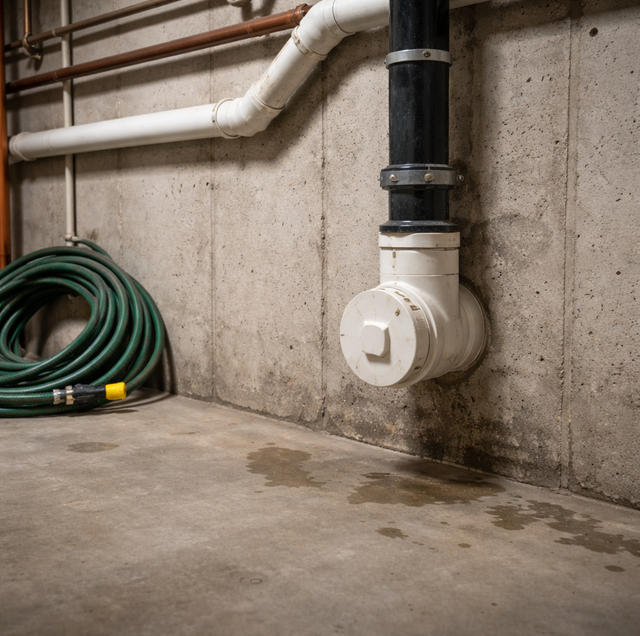
Start at the cleanout: Most homes have a main cleanout, a capped fitting that opens directly into the main drain, often in the basement, a utility area, or just outside the foundation. Opening it lets a plumber gauge whether the line is holding water and where the blockage sits.
If a cleanout cap is bulging, weeping, or you know the system is backed up, do not open it yourself. A backed-up main can hold standing wastewater under head pressure, and cracking the cap can release sewer gas and send contaminated water across the floor. That is a call to make, not a cap to loosen.
Camera inspection: The tool that turns guessing into knowing is a drain camera, a waterproof video head on a flexible cable fed into the line through the cleanout. It shows the plumber the actual inside of the pipe, whether the wall is caked in grease, whether roots are fanning through a joint, or whether the line dips into a belly. It also locates the trouble by distance so nobody digs blind.
Snake or jet, matched to the cause: A cable machine, or snake, is a rotating steel cable that bores through or breaks up a soft clog and can cut through some root growth. Hydro jetting uses water at high pressure through a special nozzle to scour the full inside diameter of the pipe, which strips baked-on grease and scale rather than just poking a hole through it. A camera pass afterward confirms the line is clear. Both are equipment-and-training jobs, not rental-store afternoons, because a jetter aimed wrong can damage a fragile old pipe.
What Not to Do While You Wait
The instinct when everything drains slowly is to buy the strongest chemical drain cleaner on the shelf. On a whole-house slowdown, that is the wrong move. Those products are made for a small, local clog close to a fixture. Poured into a main line that is already restricted, the caustic liquid just sits on top of the blockage in standing water, doing little to the actual obstruction while it corrodes older metal pipe and creates a hazard for whoever opens the line next.
Skip the boiling-water tricks on a full main too. Ease off heavy water use, keep the worst offenders like the dishwasher and laundry idle so you are not pushing more into a line that cannot keep up, and get the line looked at before it tips from slow into a full backup.
Frequently Asked Questions
Yes, on a septic system, a full or failing tank backs the problem up into the house. When the tank fills past its outlet or the drain field stops accepting water, the main line has nowhere to empty, so every fixture slows at once, exactly like a blocked main. A telltale is soggy or unusually green ground over the drain field. Most tanks need pumping every three to five years, and an overdue tank is a common reason a whole-house slowdown returns weeks after the pipe itself was cleared.
Intermittent gurgling and odor usually trace to a trap losing its water seal. Every drain trap holds a small plug of water that blocks sewer gas, and a venting problem or heavy draining elsewhere can siphon that plug out. Once the trap is dry, gas rises until the next use refills it, which is why the smell comes and goes rather than staying. A trap in a guest bath or floor drain that is rarely used can also simply evaporate dry over a few weeks.
It can. Homes on hard water build interior scale faster, and a softener slows that buildup by reducing the mineral load. Pipe material matters more, though. Cast-iron and clay mains, common in houses built before the 1970s, corrode and shift at the joints far more than modern PVC, so they collect scale and admit roots sooner. Age is why two houses on the same street can have very different clog histories.
A blockage from grease or a belly will not, because the cause is still sitting in the pipe. A slowdown that follows a heavy rain sometimes eases as groundwater drops, which points to roots or a cracked line letting groundwater seep in rather than a normal clog. If slowness comes and goes with the weather, that pattern itself is diagnostic and worth mentioning to the plumber, because it changes what they look for.
There is no fixed calendar for everyone. A house with mature trees over the sewer path or a known root history often benefits from a preventive cleaning every 12 to 24 months, timed before the growth rebuilds enough to slow things. A newer home on PVC with no trees may go many years untouched. The camera inspection is what sets the interval, since it shows how fast a given line actually fouls rather than guessing from a schedule.
No, and mixing them up sends people chasing the wrong fix. Water pressure is about the clean, pressurized supply pushing water into your fixtures, and it runs on entirely separate pipes. Drainage is the gravity side carrying waste away. Slow drains never come from a pressure problem, so if faucets are weak and drains are slow at the same time, you have two unrelated issues to sort out, not one.
Have every drain in the house slowed to a crawl? Book a camera diagnosis before a slow line becomes a backup. East Coast Plumbing serves Barto, Boyertown, and Pottstown. Call (610) 944-2998.
