
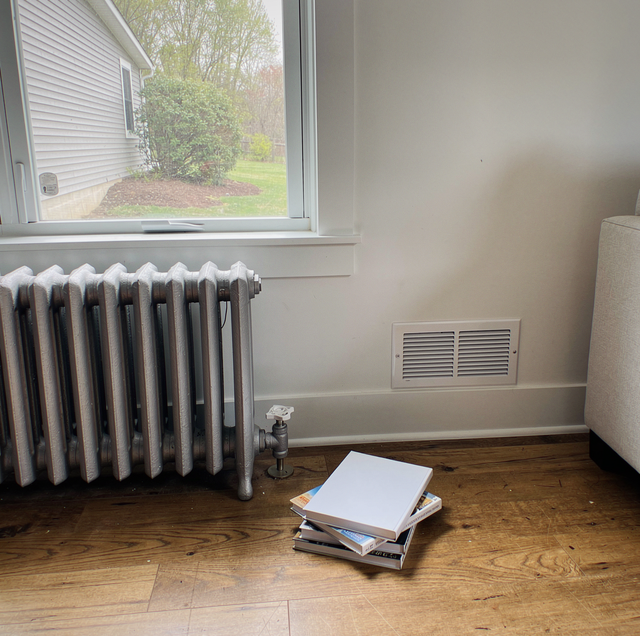
Two Kinds Of Warm
Walk out of a cold hallway into a room with a cast-iron radiator working under the window, and the warmth meets you before you're all the way through the door. It's steady, it comes from one spot, and it doesn't fade if you step a few feet away. Now do the same in a room heated by a floor or ceiling vent. The air near the vent feels almost hot, the middle of the room feels comfortable, and the corner near an exterior wall still has a chill. Same thermostat setting, same outdoor temperature, two very different physical experiences of "warm."
That difference isn't about which system is set higher. It comes down to how each one moves heat into a room. A boiler heats water and sends it through pipes to radiators or baseboard units, which radiate that heat into the space, much like a warm stone keeps radiating heat long after you pull it from a fire. A furnace heats air directly and pushes it through ductwork to vents, the way a hair dryer pushes warm air at whatever it's aimed at. One warms objects and the air around them; the other warms the air itself and relies on that air circulating to even things out. That one distinction explains almost every difference you'll notice living with either system.
How Forced-Air Heat Moves Through A House
A forced-air system burns gas or uses electric resistance or a heat-pump coil to warm air inside a heat exchanger, and then a blower pushes that heated air through ductwork to registers in each room. Return-air grilles pull cooler air back to be reheated, so the whole house is on a loop. Because heat is carried by moving air, a room warms fast once the blower kicks on, and the same ductwork can carry cooled air in summer if paired with central air, one set of ducts handling both jobs.
The tradeoff is that moving air doesn't hold heat evenly. Warm air rises and cool air sinks, so a two-story home on forced air often runs warmer upstairs than downstairs unless the ductwork is zoned to compensate. Air moving through ductwork also loses some heat before reaching a distant room, especially where that ductwork runs through an unconditioned attic or crawlspace. And because the blower cycles on and off rather than running continuously, you feel a rhythm to the heat: a burst of warm air, a leveling off, then later, another burst.
How A Boiler (Hydronic) System Moves Through A House
A boiler heats water, sometimes to a near-simmer for older cast-iron radiators, sometimes to a much lower temperature for baseboard or radiant-floor tubing, and circulates it through a closed loop of pipes with a pump. That hot water passes through radiators, baseboard convectors, or floor tubing, giving up heat to the metal or the slab, which radiates it into the room. No blower, no ductwork, no air moving room to room; the water simply keeps circulating and releasing heat as long as the boiler is calling for it.
Because the heat comes from a warm surface rather than moving air, a hydronic system tends to hold a room at a steadier temperature floor to ceiling and corner to corner. There's no blast of hot air and no lull between cycles; a radiator that's been running for an hour is simply warm the whole time. That same steadiness makes hydronic heat slower to respond, since the water and the metal both have to heat up before you feel a change. Zoning a hydronic system is doable, but it means a separate zone valve and thermostat wire rather than just adding a duct branch.
Boiler Vs. Forced-Air Heat, Side By Side
| Factor | Hydronic (Boiler/Radiator) | Forced-Air (Furnace/Ducts) |
|---|---|---|
| Heat-delivery method | Hot water through pipes to radiators, baseboard, or floor tubing | Heated air pushed through ductwork to vents |
| Comfort / even-heat | Steadier, less floor-to-ceiling and room-to-room swing | Fast to warm a room, but prone to stratification and cold corners |
| Humidity effect | Doesn't dry the air; separate ventilation may be needed for stale air | Air movement dries indoor air further, especially in cold weather |
| Maintenance needs | Boiler service, circulator pump checks, radiator bleeding, expansion tank | Filter changes, blower and burner service, duct inspection |
| Noise | Quiet operation; occasional pipe ticking as metal expands | Blower hum, duct rattle or whistle from air movement |
| Retrofit complexity | Adding ductwork later means finding chase space for large trunk lines | Adding radiators means running new supply and return piping to a boiler loop |
Neither column is universally better. A hydronic home already has the harder infrastructure, the piping, in place, while a forced-air home already has the duct chases built. Retrofitting the other system into either one is a real construction project, not a simple equipment swap.
Comfort, Air Quality, And Humidity
Forced air constantly circulates the same household air, so anything airborne in it- dust, pet dander, cooking odors- gets carried through the whole house rather than staying in one room. It also pulls moisture out of the air faster, since moving warm air absorbs humidity readily and vents that dryness along with the heat, part of why forced-air homes often feel like they need a humidifier by midwinter.
A hydronic system doesn't move air at all, so it doesn't stir up dust or dry a room the way a blower does. A room still loses humidity in cold weather because outdoor air holds less moisture and infiltration keeps trading indoor air for that dry air, but the heating system itself isn't actively pulling extra moisture out. That's a real point in hydronic's favor for anyone sensitive to dry air or dust, though it also means a hydronic-only home has no built-in ventilation for stale air; that has to come from another source, like exhaust fans.
Maintenance Each System Actually Asks Of You
Forced-air maintenance centers on the parts doing the moving: the blower motor, burner assembly, filter, and ductwork. Filters need regular changes, or the blower works harder, and airflow suffers. The burner and heat exchanger need periodic inspection, partly for efficiency and partly because a cracked heat exchanger is a safety issue, not just a comfort one. Ductwork rarely fails outright, but leaks at the joints waste conditioned air into wall cavities, quietly costing you comfort in the rooms furthest from the furnace.
Hydronic maintenance centers on the water side: the boiler, the circulator pump, and the radiators or baseboard units releasing the heat. Radiators occasionally need bleeding to release trapped air, and the expansion tank needs periodic checking too. With no filter to change and no blower to service, hydronic systems often go longer stretches feeling maintenance-free, but the pump, valves, and controls still benefit from a yearly look before heating season starts in earnest.
What Switching From One To The Other Actually Involves
Converting a home from hydronic heat to forced air, or the reverse, is bigger than most people expect, because you're adding a delivery network the house was never built with, not just swapping equipment. Radiators to forced air means finding a path for ductwork and return-air grilles through walls, floors, or ceilings never designed to hold them. Going the other direction means running supply and return piping to every room, plus finding space for radiators or baseboard where none exists.
Because of that, most homes with one system keep it and simply modernize it rather than converting outright: a boiler replaced with a more efficient unit on the same piping and radiators, or a furnace replaced with a higher-efficiency model on the same ductwork. Full conversions do happen during larger renovations that already involve opening walls for other reasons, but they're the exception, not the routine choice.
A Related But Separate Issue: The Pipes Themselves
It helps to draw a clear line between the heating system and the plumbing that shares the house with it. An older home with an original boiler and radiator setup often also has old supply piping elsewhere, sometimes galvanized steel, sometimes polybutylene from a later era, both known for corroding or failing from the inside over the decades. That aging pipe is a plumbing issue, not a heating issue; it affects water at your faucets and showerheads, not the water circulating in the closed heating loop, which runs through its own piping and never mixes with your household supply.
It's an easy pair of issues to lump together since both involve pipes hidden in the same old walls, but they age and fail independently. A boiler can run fine while the domestic water piping nearby is corroding and restricting flow, or the reverse: solid modern supply piping alongside a boiler and radiators decades old and due for attention. Worth knowing which one you're dealing with before assuming a problem with one means trouble with the other.
Frequently Asked Questions
Yes, and it's common in older homes that added central air conditioning later. A typical setup keeps the original boiler and radiators for heating while adding a separate air handler and duct system just for cooling, or a small forced-air zone in an addition, with the rest of the house staying on the original hydronic loop. The two systems don't need to interact since they run on separate equipment and controls.
That's usually trapped air in that radiator, not a boiler problem. As water heats and cools, small amounts of air can work into the piping and collect at the highest point in a radiator, forming a pocket that blocks hot water from filling the unit completely. Bleeding that radiator, opening its small air valve briefly until water instead of air comes out, usually restores full heat within minutes.
To a point, yes; a furnace cycles on and off as the thermostat is satisfied. But if it cycles very frequently, running only a few minutes at a time, that's often a sign the furnace is oversized for the space or airflow is restricted, worth having a technician check rather than assuming it's normal.
Often, yes. Knocking in an older system often comes down to whether it's a steam or hot-water boiler. Steam systems rely on pitched pipes so condensed water drains back correctly, and if a pipe has settled out of pitch over the decades, trapped water causes the hammering sound as steam pushes past it. Hot-water systems can knock too, usually from trapped air rather than drainage pitch, a simpler fix.
Generally yes. Cast-iron radiators were designed around fairly hot water, and older standard boilers supplied it at one fixed high temperature. Many modern condensing boilers modulate their output and supply lower water temperatures for most of the season, stepping up only on the coldest days, letting an old radiator system gain real efficiency from new equipment without replacing the radiators themselves.
It helps, but it isn't automatic. Cooling-only ductwork is often sized for a smaller volume of air moving one direction, and may not suit a heating load, particularly in the coldest rooms furthest from the air handler. A technician still needs to check duct sizing, insulation, and register placement before handing existing central-air ductwork to a furnace without adjustment.
Neither system is a downgrade from the other; they're different tools solving the same problem in different ways, and the right one for a given house usually already exists in that house's walls. What matters more than picking a winner is understanding which one you have, what it needs to keep working well, and how to tell a heating-system issue apart from an aging-pipe issue happening to share the same basement.
Get your heating system inspected before the season turns — East Coast Plumbing can evaluate your boiler, radiators, or furnace and tell you honestly what it needs. East Coast Plumbing serves Barto, Boyertown, and Pottstown. Call (610) 944-2998.
