
The Generac arrived on a flatbed, Tuesday morning. Your concrete pad was poured two weeks ago. The transfer switch is wired, the electrician's done, and now somebody has to figure out the gas line -- specifically, how big it needs to be and whether the pipe already running to your furnace and water heater has any chance of also supplying a 22-kilowatt generator during a January power outage.
That question is more complicated than the generator salesman let on. He told you it runs on natural gas, maybe mentioned a dedicated line, and handed you an installation manual the size of a paperback novel. The manual has a pipe sizing table. The table looks like something from a chemistry textbook. Here is what it is actually telling you.
Quick-Reference: Natural Gas Line Size by Generator Output
This table covers typical residential standby generators on natural gas, standard residential pressure (5-7 inches of water column), using Schedule 40 black iron pipe. Numbers are maximum pipe run in feet.
| Generator Size | 3/4" Pipe | 1" Pipe | 1-1/4" Pipe | 1-1/2" Pipe |
|---|---|---|---|---|
| 7-8 kW | 55 ft | 200 ft | 820 ft | -- |
| 10 kW | 20 ft | 85 ft | 370 ft | 800 ft |
| 13-14 kW | 10 ft | 50 ft | 245 ft | 545 ft |
| 16-17 kW | -- | 40 ft | 190 ft | 425 ft |
| 20 kW | -- | 20 ft | 130 ft | 305 ft |
| 22 kW | -- | 15 ft | 115 ft | 260 ft |
| 27 kW | -- | -- | 85 ft | 203 ft |
These numbers are for straight Schedule 40 black iron at standard residential pressure. CSST sizing runs on different charts -- the internal dimensions differ from black iron -- and your plumber will use the right table for whatever material goes in the ground.
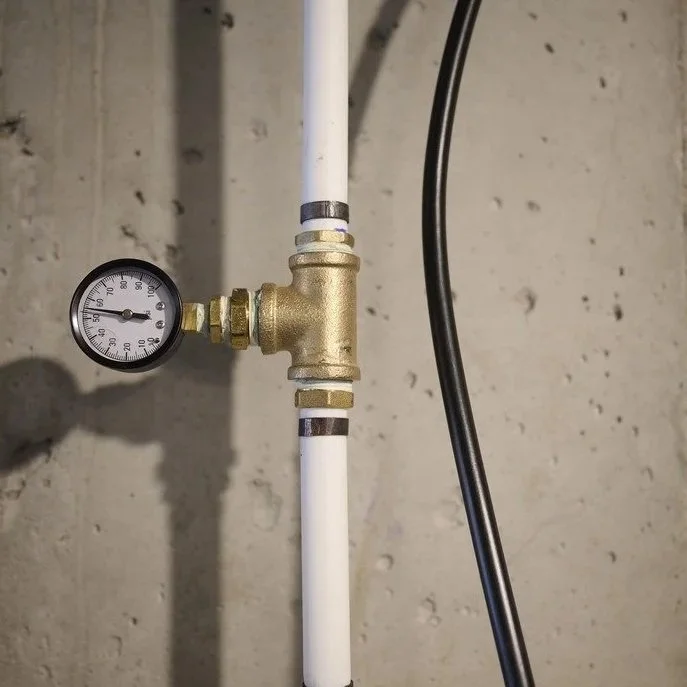
What determines how much gas your generator actually burns
A generator is an engine that converts gas into electricity. It does this with poor efficiency. Most residential air-cooled units consume between 13,000 and 16,000 BTU of natural gas for every kilowatt of electricity they produce. A 22 kW whole-house generator running at full load needs somewhere around 280,000 to 350,000 BTU per hour.
Put that against the rest of your house. Your furnace input is probably 80,000 to 100,000 BTU. Your 50-gallon water heater fires at around 50,000 BTU when it runs. The generator, when the grid drops at midnight in February and every appliance in the house kicks on at once, is demanding more gas than your heating and hot water systems combined. And it needs that gas delivered at the right pressure.
The number that drives the sizing calculation is in the generator's installation manual: maximum BTU input at 100% load. Find that number first. Everything else follows from it.
Propane generators use the same sizing logic, but different tables -- propane runs at higher pressure with different energy content than natural gas. If your house uses propane, your plumber will reference LP-specific sizing charts and factor in tank vaporization capacity, which matters most on cold nights when demand spikes.
The role of distance: why 30 feet and 150 feet are very different problems
This is where the job gets specific to your property. A 22 kW generator sitting 20 feet from the meter is a completely different gas line installation than that same generator sitting at the far corner of the property, 150 feet away.
Gas in a pipe behaves like water in a garden hose. Pressure drops as it travels. The longer the run, the thinner the delivery at the far end -- unless you step up the diameter. A 1-inch natural gas line loses pressure over distance. At some point along the run, that 1-inch line can't move enough cubic feet per hour to keep the generator producing rated power. You go to 1-1/4 inch, or the generator starves and shuts down mid-outage.
Fittings count too. Each elbow or tee adds resistance equal to roughly 5 feet of straight pipe. A run with six elbows is effectively 30 feet longer than the tape measure shows. That matters when you're close to the edge of what a given pipe diameter can handle.
The math isn't guesswork. Pipe sizing tables take the generator's BTU demand, the total equivalent pipe length, and the allowable pressure drop, and they give you the minimum diameter that will deliver enough gas. The result is often larger than people expect -- especially for generators 20 kW and above on runs longer than 50 feet.
Why your existing gas line probably can't just be tapped
The most common question a plumber gets during generator installations: "Can't you just put a tee on the line running to the furnace?"
Almost always, no. And the reason has nothing to do with codes -- it's pure physics.
Every gas line in your house was sized when it was installed, based on the appliances connected to it at that time. The line running to your furnace was sized to supply your furnace. Maybe it also branches to your water heater. That line is running close to its designed capacity. Add the generator's startup surge -- which is significantly higher than its steady-state demand -- and you get a pressure drop across the whole system. Pilot lights flutter. Furnace burners misfire. The generator doesn't reach full output.
Most generator manufacturers specify a dedicated line running directly from the meter, or from a tee installed very close to the meter, to the generator. That way the generator's demand doesn't compete with your heating system.
But the meter itself is also part of this calculation. Standard residential gas meters have a capacity rating -- typically 250 to 500 cubic feet per hour depending on the meter size. A whole-house generator plus a furnace, water heater, and gas dryer can push a smaller meter to its limit. Some installations require the utility to upsize the meter. That adds time to the project. The plumber coordinates with the gas company, but the utility runs their own schedule -- meter upgrades can take several weeks to arrange.
Black iron, CSST, or flex -- which pipe goes where
Three materials show up on generator gas line jobs. Each has its place.
Black iron pipe is threaded and screwed together fitting by fitting. It runs through mechanical rooms and along basement walls. It handles the full pressure of the line without issue and lasts for decades. Threading it takes time, and it doesn't bend around obstacles easily -- but for exposed interior runs, it's still the workhorse.
CSST -- corrugated stainless steel tubing -- is flexible, faster to install, and common on longer runs where threading black iron would be impractical. For underground sections between the house and a generator at the far end of the property, CSST inside a protective conduit is the standard approach. One detail that matters: CSST requires bonding. A nearby lightning strike can induce electrical current that damages unbonded CSST. A plumber who installs it without bonding is leaving a real hazard in your yard.
The final connection from the hard pipe to the generator's inlet is typically a short flexible stainless-steel appliance connector -- 18 to 24 inches of it. That flex section absorbs the vibration from the generator's engine so it doesn't stress the rigid pipe upstream.
Most installations use all three: black iron or CSST for the main run, CSST in conduit underground, flex connector at the generator.
What the permit and utility side looks like
A licensed master plumber won't install a new gas line without a permit. That's not overcaution -- it's the mechanism that gets a gas inspector to the site before the line goes into service. The inspector checks pressure, connections, and materials. This is the step that catches a leaking fitting before it becomes a problem.
The utility company is separate from the permit process. They own everything up to and including the meter. If the meter needs to be upgraded, they schedule that work on their timeline. Some utilities also require notification or a presence when a new service connection is made at the meter.
Municipalities in Pennsylvania vary. What's required in one township may differ from the next. A plumber who works regularly in Montgomery, Bucks, Berks, and Lehigh Counties knows which inspectors to call and what paperwork each jurisdiction requires.
Common mistakes that cause generators to underperform
The most frequent problem: an undersized pipe on a long run. An installer uses 3/4-inch because it's cheaper and faster. The generator runs fine during a 10-minute load test. Three days into a winter outage, with the furnace also running, the generator drops output or trips offline.
Ignoring fittings in the calculation is the second one. A run that looks like 80 feet on a tape measure may work out to 120 feet in equivalent pipe length once every elbow and tee is counted. That extra 40 feet of equivalent resistance can be the difference between adequate delivery and inadequate.
Tapping an existing line without recalculating the total load is the third. A homeowner tries to add the generator by teeing into the furnace supply. The line wasn't sized to carry both. The furnace had the line to itself for years, and nobody noticed a problem -- until the generator shows up.
And skipping the meter capacity check is the fourth. A plumber who sizes the pipe correctly but doesn't confirm the meter can handle the combined load leaves the homeowner with a generator that underperforms the moment the heating system fires.
How a plumber actually sizes the line
The sizing process starts with the generator's specification sheet. The plumber notes the BTU demand at 100% load, the required inlet pressure, and the fuel type. Then they measure the total pipe run -- every foot of pipe, plus five feet for each fitting -- to get the total equivalent length.
From there, they apply a pipe sizing table specific to the pipe material being installed. The table returns the minimum pipe diameter that will deliver enough gas at the right pressure over that distance. If the answer is 1-1/4 inch on a 100-foot run, that's what goes in. Not 1 inch because it's closer to what's already in the basement.
The sizing isn't one number for the whole system. It's a calculation for each section. The segment right at the meter may need to be larger because it's carrying the full generator demand. Farther along, after a tee where a branch feeds only part of the load, a smaller diameter may be appropriate. I've seen plenty of jobs where a homeowner's previous installer made this a single-diameter decision -- and the generator never ran quite right.
This is work that needs a licensed master plumber. Not because the concept is exotic, but because an undersized line that fails during a winter power outage is not a minor inconvenience.
Frequently Asked Questions
Most 22 kW natural gas generator installations end up at 1-1/4 inch for runs up to about 100 feet, or 1-1/2 inch for longer runs. The exact size depends on total equivalent pipe length including fittings. A short run — under 15 feet — might allow 1 inch, but that becomes marginal quickly as the run gets longer.
Yes. CSST can be used for the full run, including underground sections, when installed inside a protective conduit. CSST sizing tables differ from black iron, so your plumber will use the appropriate chart. Bonding is required wherever CSST is installed — don't skip that step.
If your current meter is a standard residential unit and you're adding a generator 18 kW or larger, the utility may need to upgrade the meter to handle the combined load. Your plumber coordinates with the gas company. Meter upgrades can take several weeks, so it's worth getting the conversation started early in the project.
A straightforward run — 50 to 80 feet, mostly through a basement and across the yard — takes one day. Longer runs or underground sections add time. Permit scheduling, inspection, and any utility meter work can add one to three weeks depending on the municipality and the utility's schedule. Budget for the full timeline, not just the installation day.
In almost all cases, no. The existing line was sized for the appliances already on it. Adding a generator's load — significantly more gas than a furnace — causes pressure drops that affect the entire system. A dedicated line run from near the meter is the correct approach.
Yes. Any new gas line in Pennsylvania requires a permit and inspection. The inspection confirms the line holds pressure, and the connections and materials are correct. A licensed master plumber pulls the permit as part of the job.
Homeowners in Montgomery, Bucks, Berks, and Lehigh Counties tend to call about generator gas lines in late October, right after the first stretch of storm warnings, when it becomes real that a generator sitting on a pad but starved for gas does exactly nothing.
