
6 Signs Your Older PA Home Has Failing Pipes
Quick Answer: An older home's pipes are failing when you see rusty or discolored water, frequent or recurring leaks, persistently low water pressure, visible corrosion on exposed pipes, metallic-tasting water, and aging materials like galvanized steel that corrode from the inside. These are signs the plumbing system is wearing out as a whole rather than having one isolated problem. Older Pennsylvania homes often have decades-old galvanized pipes nearing the end of their life. Catching the signs early lets you plan a repipe before a major leak or burst, rather than reacting to one.
Older homes have plenty of charm, but their plumbing is often decades old and quietly wearing out behind the walls. Pipes don't last forever, and when they reach the end of their life, they send signals — discoloration, leaks, pressure problems — long before they fail outright. For owners of older Pennsylvania homes, learning to read those signs is what separates a planned repipe from an emergency flood. Here's what failing pipes look like before they give out.
Failing Pipes Signal a System Wearing Out
The important distinction with older-home plumbing is between an isolated problem and a system at the end of its life. One leak on sound pipes is a repair. But discoloration, recurring leaks, and pressure problems appearing together point to the pipes themselves deteriorating throughout the home. In older homes, the pipes have often been in the walls for many decades, corroding slowly from the inside, so the signs tend to be system-wide. Reading them as evidence of aging pipes — rather than as separate, unrelated annoyances — is what tells you the plumbing is nearing the point where replacement makes more sense than another patch.
The Signs to Watch For
Rusty or Discolored Water
Brown, yellow, or reddish water, especially when you first turn on a tap, usually means corrosion inside metal pipes. As old pipes corrode internally, rust ends up in your water. Discolored water is one of the clearest signs that aging pipes are deteriorating from within.
Frequent or Recurring Leaks
When an older home springs leaks in different spots, it's no longer a coincidence — it's aging pipes failing throughout the system. Once you're repairing leaks regularly, the pipes are telling you they're at the end of their service life.
Low Water Pressure
Persistently low pressure throughout the home can mean corrosion and mineral buildup are narrowing the inside of the pipes, restricting flow. In old galvanized pipes, especially, the interior gradually closes, and pressure drops as a result.
Visible Corrosion
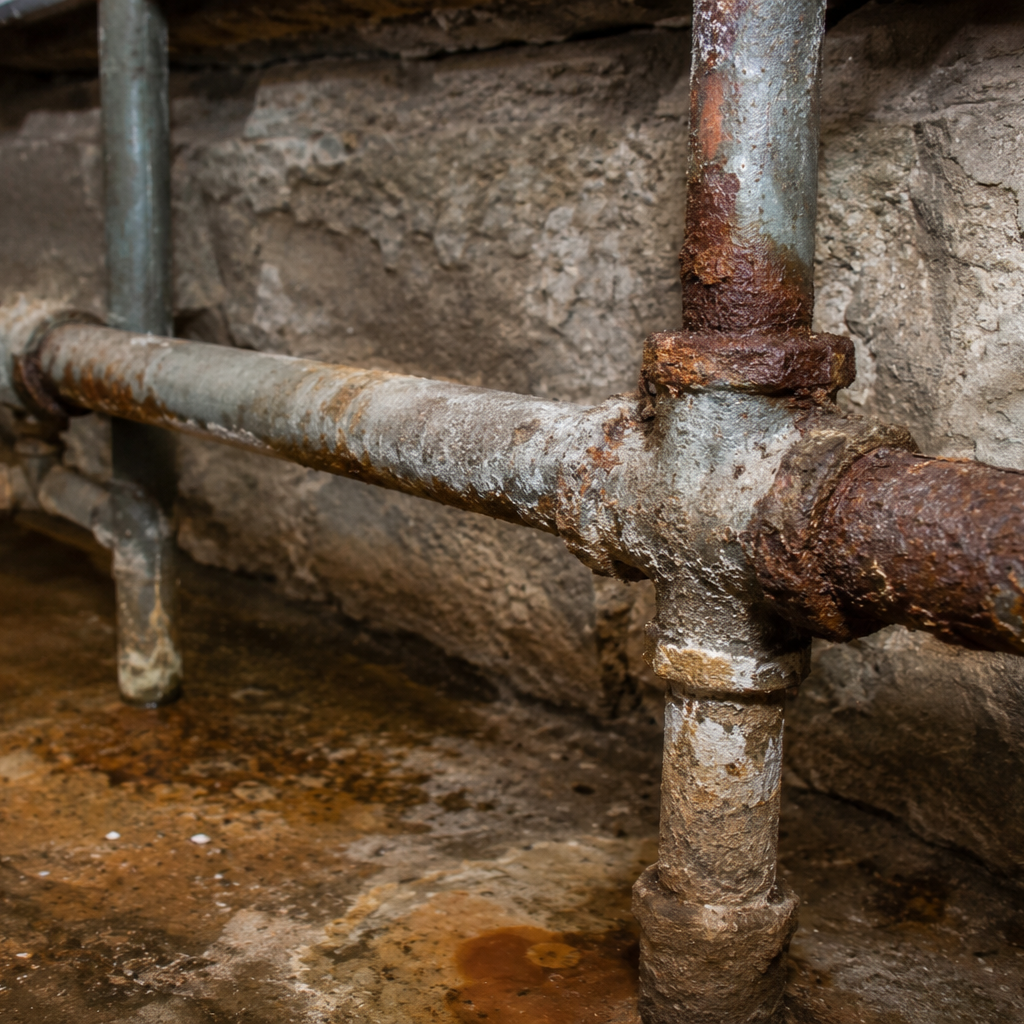
Exposed pipes in the basement or crawl space that show rust, flaking, dimpling, discoloration, or stains are visibly deteriorating. What you can see on the outside often reflects worse corrosion inside.
Metallic-Tasting Water
Water with a metallic taste can indicate corroding metal pipes leaching into the supply. Paired with discoloration, it points to pipes breaking down internally.
Old Pipe Materials
The material matters. Galvanized steel, common in older homes, corrodes and clogs from the inside over decades and eventually leaks. A home still plumbed with aging galvanized steel is a strong candidate for failing pipes, regardless of how many leaks it's had so far.
| Sign | What it indicates |
|---|---|
| Rusty/discolored water | Internal corrosion of metal pipes |
| Frequent recurring leaks | System-wide pipe failure |
| Persistently low pressure | Corrosion/buildup narrowing pipes |
| Visible corrosion | Active deterioration |
| Metallic-tasting water | Pipes leaching into the water |
| Aging galvanized material | Pipes near end of life |
Why Catching It Early Pays Off
The reason these signs matter is timing. Pipes that are failing will keep failing, and the difference between catching it early and waiting is the difference between a planned project and an emergency. A repipe scheduled on your terms — before a major leak or a winter burst floods the house — is far less disruptive and damaging than reacting to a pipe that lets go inside a wall. In older Pennsylvania homes, where aging galvanized pipes meet hard winter freezes, the stakes are higher because deteriorated pipes are also more vulnerable to bursting. Watching for the signs and addressing failing pipes before they fail outright protects both the home and your peace of mind. A licensed plumber can assess the pipes' material, age, and condition and advise whether targeted repairs or a full repipe is the right move.
If your older home has had more than one pipe leak in a short span, or you're seeing discolored water and low pressure together, treat it as a system signal, not separate annoyances. Having the plumbing assessed then — before winter — lets you plan a repipe instead of dealing with a burst pipe in January.
Frequently Asked Questions
Watch for signs that the system is deteriorating: rusty or discolored water, frequent leaks at different spots, persistently low water pressure, visible corrosion on exposed pipes, metallic-tasting water, and aging materials such as galvanized steel. When several of these appear together, or leaks recur, the pipes are wearing out rather than having a single isolated fault. A licensed plumber can assess the material, age, and condition of your pipes to confirm whether they're failing.
Brown, yellow, or reddish water, especially on first use after the tap's been off, usually means the inside of your metal pipes is corroding, and that rust is entering your water. It's a common sign in older homes with aging metal plumbing. Combined with low pressure, frequent leaks, or a metallic taste, discoloration suggests the pipes are deteriorating internally, and the home may be approaching the point where repiping makes more sense than ongoing repairs.
Yes, over time. Galvanized steel pipes, common in older homes, corrode and build up mineral deposits on the inside over decades, which narrows the pipe, restricts flow, discolors the water, and eventually leads to leaks. A home still plumbed with aging galvanized steel is a strong candidate for failing pipes, often regardless of how many leaks it's had so far. A plumber can confirm what your home is plumbed with and whether the material's age warrants replacement.
It depends on whether the problem is isolated or system-wide. A single leak on otherwise sound pipes is a repair. But when an older home shows multiple signs — recurring leaks, discoloration, low pressure, aging galvanized material — the pipes are failing as a system, and repeated repairs just postpone the next leak. In that case, repiping replaces the failing system and resolves the problems at the source. A plumber can assess your pipes and recommend the right path.
Because deteriorated pipes are more vulnerable to freezing and bursting, and a burst pipe in a Pennsylvania winter can flood a home fast. Catching failing pipes early lets you plan a repipe on your terms rather than reacting to an emergency in the cold. Addressing weak, corroded pipes before winter reduces the risk of a freeze-driven burst and the serious water damage that comes with it. Planning ahead is far less disruptive than an emergency repair.
Read the Signs Before the Pipes Give Out
Failing pipes in an older home announce themselves through rusty water, recurring leaks, low pressure, visible corrosion, metallic taste, and aging galvanized material — signs that the plumbing system is wearing out as a whole, not failing in one spot. In older Pennsylvania homes, those deteriorating pipes are also more prone to winter bursts. Catching the signs early lets you plan a repipe before a major leak or freeze forces your hand. Treat the signals as a system warning, get the plumbing assessed, and replace failing pipes on your schedule rather than the pipe's. In an older home, that bit of foresight is the difference between a planned upgrade and a midnight emergency with water coming through the ceiling.
Seeing rusty water or repeated leaks in an older home? — Get your pipes assessed and a straight repair-or-repipe answer from a licensed master plumber. East Coast Plumbing serves Barto, Boyertown, Pottstown. Call (610) 944-2998.
