
Sump Pump Running Nonstop? Why It Happens and the Real Risk
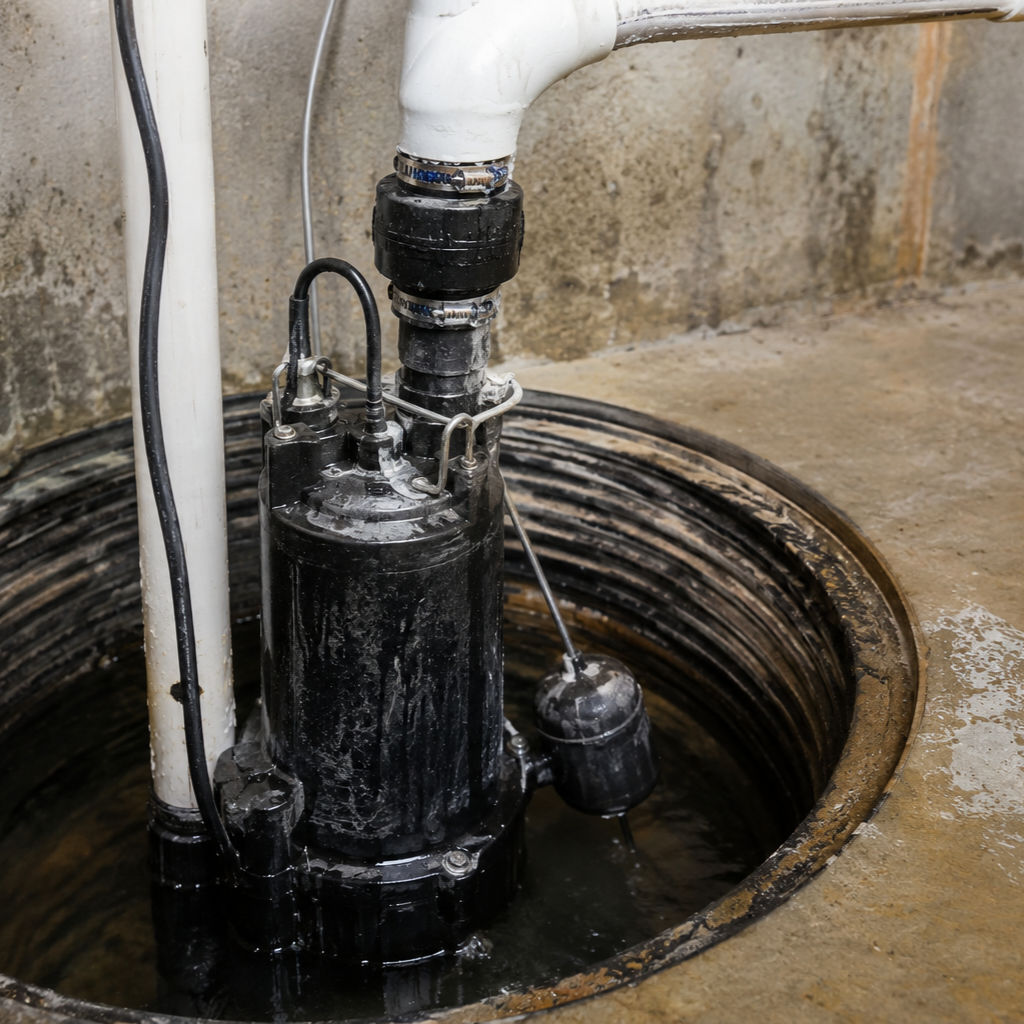
A sump pump is supposed to kick on when water rises and then rest. When it runs constantly, cycling on and on without a break, something is usually wrong — and because the pump is your basement's defense against flooding, a pump running itself to death is a problem worth solving before it fails. The cause can be the water coming in, or the pump and its parts misbehaving. Sorting out which it is tells you if you're facing a drainage issue or a pump repair.
Quick Answer: A sump pump running constantly can be normal during heavy rain or snowmelt, but nonstop running otherwise points to a problem: a stuck or faulty float switch telling it to keep running, a failed check valve letting pumped water flow back into the pit, a pit that's too small so it fills and empties too fast, high groundwater or a drainage issue feeding constant water, or a pump too small for the load. Constant running wears the pump out fast and risks failure when you need it. Pinpointing the cause prevents burnout and a flooded basement.
A sump pump is supposed to kick on when water rises and then rest. When it runs constantly, cycling on and on without a break, something is usually wrong — and because the pump is your basement's defense against flooding, a pump running itself to death is a problem worth solving before it fails. The cause can be the water coming in, or the pump and its parts misbehaving. Sorting out which it is tells you if you're facing a drainage issue or a pump repair.
Constant Running Is Either Real Water or a Malfunction
When a sump pump won't stop, there are really two possible causes: it's responding to a genuine flood, or it's malfunctioning and running when it shouldn't. During heavy rain, rapid snowmelt, or a high water table, a pump running frequently or even continuously can be normal — it's doing its job against a lot of water. But if it's running nonstop in dry conditions, or far more than the weather warrants, the problem is in the pump, its switch, its plumbing, or the pit. Figuring out which category you're in is the first step, and the timing — whether it tracks with rain or runs regardless — is the biggest clue.
When It Might Be Normal
A sump pump working hard during a storm, heavy rain, or spring snowmelt is often just keeping up with real water, and frequent cycling in those conditions can be expected. Homes with a high water table or in wet, low-lying areas naturally see more pump activity. So before assuming a fault, consider the conditions: if it's pouring and the pump is busy, that may simply be the system protecting your basement. The concern is constant running that doesn't match the weather.
The Malfunctions That Cause Constant Running
A Stuck or Faulty Float Switch
The float switch senses the water level and tells the pump when to turn on and off. If it sticks in the "on" position, gets tangled, or fails, the pump never gets the signal to stop and runs continuously. A stuck float is one of the most common reasons a pump runs nonstop, and sometimes it's as simple as the float being jammed against the pit wall.
A Failed Check Valve
The check valve keeps pumped water from flowing back down into the pit after the pump pushes it out. If the check valve fails or is missing, the water the pump just expelled drains right back into the pit, so the pump immediately has water to pump again and keeps cycling. This back-and-forth makes the pump run far more than it should.
A Pit That's Too Small
If the sump pit (basin) is too small, it fills up quickly, and the pump empties it quickly, causing rapid, frequent cycling. An undersized pit means the pump can never get a real rest because the basin refills almost immediately.
High Groundwater or a Drainage Problem
A persistently high-water table, poor drainage around the foundation, or a constant water source feeding the pit keep the pump working continuously. If water keeps arriving, the pump keeps running — and the underlying drainage issue is the real thing to address.
An Undersized or Failing Pump
A pump too small for the home's water volume has to run constantly to keep up, and a pump that's wearing out may run inefficiently or struggle, staying on longer than it should. Either way, the pump can't get ahead of the water.
| Cause | What's happening |
|---|---|
| Heavy rain/snowmelt/high water table | Real water — may be normal |
| Stuck/faulty float switch | Pump never told to shut off |
| Failed check valve | Pumped water flows back into pit |
| Pit too small | Fills and empties too fast, rapid cycling |
| Drainage problem | Constant water feeding the pit |
| Undersized/failing pump | Can't keep up, runs continuously |
A sump pump that runs constantly wears out far faster and may burn out — leaving you without protection right when a storm hits. Don't ignore nonstop running. Whether the cause is a stuck switch, a bad check valve, or constant water, addressing it promptly protects both the pump and your basement from flooding.
Why It Matters
Constant running isn't just a curiosity — it's hard on the pump and a risk to your home. A pump that runs nonstop wears out much faster than one that cycles normally, and the danger is that it burns out, leaving your basement unprotected exactly when heavy weather brings the water it's meant to handle. So a constantly running pump is both a sign that something's wrong now and a warning that a failure may be coming. Diagnosing the cause — whether it's a simple stuck float, a failed check valve, an undersized pit or pump, or a drainage problem feeding constant water — lets you fix it before the pump dies. A plumber can identify which it is and address it, keeping the pump healthy and the basement dry.
Frequently Asked Questions
It can be, during heavy rain, rapid snowmelt, or when the water table is high — in those conditions, the pump may run frequently or even continuously just to keep up with real water, and that’s the pump doing its job. What's not normal is constant running in dry conditions or far more than the weather warrants. If the pump runs nonstop regardless of rain, the cause is likely a malfunction — a stuck switch, failed check valve, undersized pit or pump, or a drainage issue.
The most common reason is the float switch, which tells the pump when to stop. If it sticks in the "on" position, gets tangled, or jams against the pit wall, the pump never gets the signal to shut off and runs continuously. A failed check valve can also cause it by letting pumped water flow back into the pit, so the pump immediately has water to remove again. Both are common causes of a pump that won't stop and are worth checking.
A check valve is a one-way valve on the discharge pipe that keeps the water the pump pushes out from flowing back down into the pit. If it fails or is missing, the expelled water drains right back into the basin after each cycle, so the pump immediately has water to pump again and keeps running back and forth. Replacing a failed check valve stops that cycle and lets the pump rest between real water events.
Yes, and that's the main danger. A pump that runs nonstop wears out far faster than one cycling normally, and it can burn out — leaving your basement unprotected right when a storm brings the water the pump is supposed to handle. That's why constant running shouldn't be ignored: it both signals a current problem and warns of a coming failure. Diagnosing and fixing the cause promptly protects the pump and prevents a flooded basement.
First, determine whether it's responding to real water (heavy rain, high water table) or malfunctioning. If it runs nonstop regardless of weather, check for a stuck float switch, a failed check valve, a too-small pit, or an undersized or failing pump, and address the one at fault. If the pit is constantly fed by water, the underlying drainage around the foundation may need attention. A plumber can pinpoint the cause and fix it so the pump cycles normally again.
Find Out Why, Before It Burns Out
A sump pump running constantly is either keeping up with real water — normal during storms or with high groundwater — or malfunctioning, due to a stuck float switch, a failed check valve, a too-small pit, a drainage problem, or an undersized pump. The danger is that nonstop running wears the pump out and can burn it out, leaving your basement defenseless when the next storm hits. The timing is your biggest clue: running that matches the weather may be fine, while running regardless of it points to a fault. Diagnose the cause and fix it before the pump quits.
Sump pump running nonstop? — Get the cause diagnosed and fixed before it burns out, by a licensed master plumber. East Coast Plumbing serves Barto, Boyertown, Pottstown. Call (610) 944-2998.
