
Tankless vs. Storage Tank Water Heaters for Restaurants: Which Handles the Lunch Rush?
Your lunch rush hits its peak around 12:15 on a Friday. The dishwasher has been running every three minutes since 11:30, the three-compartment sink hasn't stopped, and then the water coming out of the pre-rinse sprayer goes cold. The kitchen slows down. The dishwasher can't finish a sanitizing cycle. Your hand sinks need to deliver water above 110°F, and you're getting 80°F. The storage tank ran out.
The math caught up with you. A standard 100-gallon commercial tank heater recovers at around 130 gallons per hour on natural gas — which sounds fine until you add up the dishwasher, the three-compartment sink, the hand sinks, and prep cooking all running simultaneously for 90 minutes straight.
That's when restaurant owners start wondering whether a tankless water heater would have prevented it. Sometimes it would. Sometimes it just trades one limitation for a different one. Here's what actually matters.
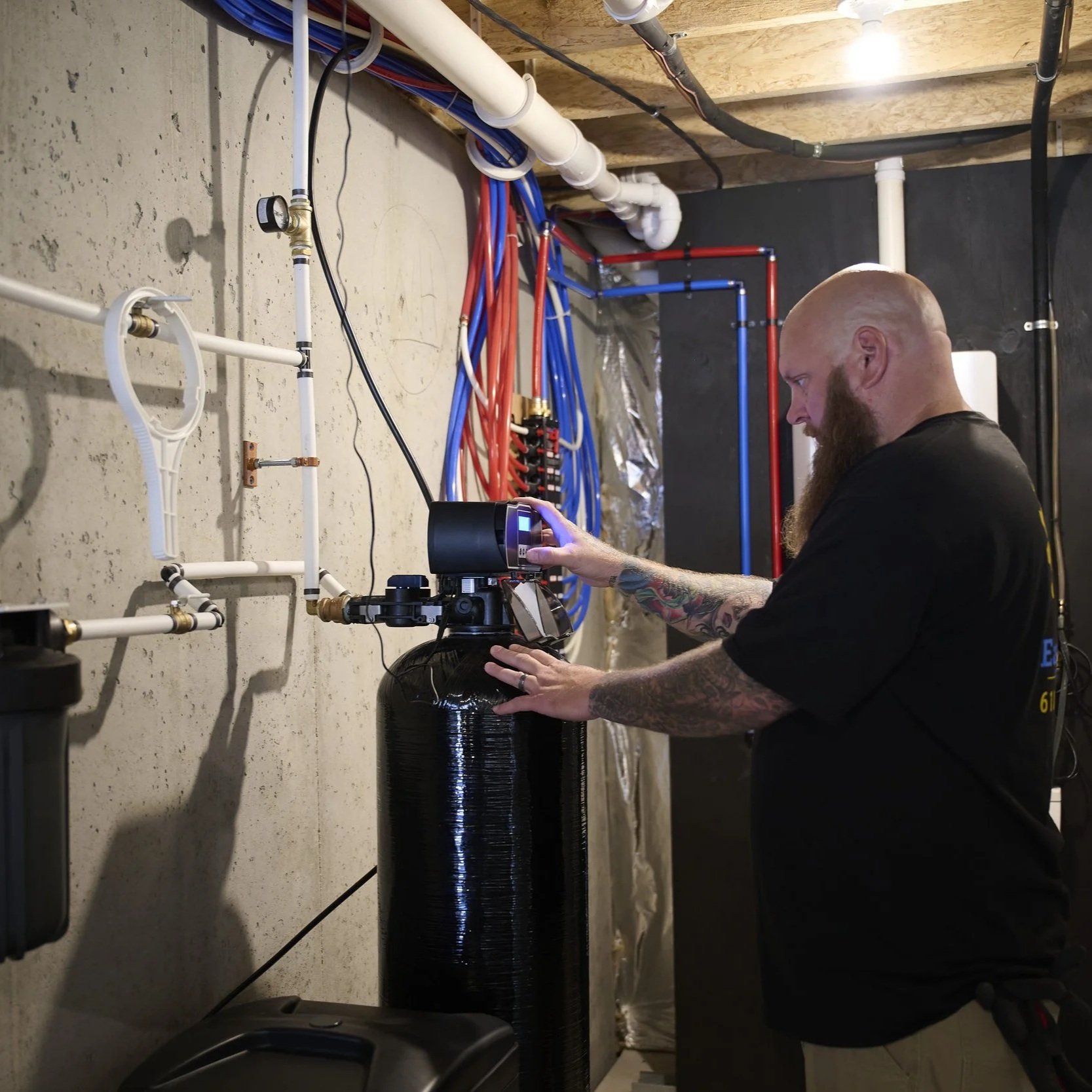
What's happening inside a storage tank heater during a busy service
A storage tank water heater is a large insulated reservoir that stays at a temperature until you draw from it. A gas burner fires underneath when the temperature drops below the setpoint and shuts off once it recovers.
The vulnerability is the recovery rate. Your tank holds 100 gallons at 140°F. Draw it down and the burner kicks on — but it takes time. A high-input commercial gas heater (150,000–199,000 BTU) might recover at 125–175 gallons per hour. That sounds adequate in isolation. During a sustained lunch rush, you're drawing faster than that recovery rate, so the tank temperature drops progressively. By the 75-minute mark, what was 140°F may be 115°F. By 90 minutes, it may be 100°F.
That progressive cooling doesn't announce itself. The dishwasher just stops sanitizing properly. The pre-rinse water goes lukewarm. You don't realize you've run out of recoverable hot water until service is already compromised.
And the fix isn't always tankless. Sometimes the answer is adding a second tank — a stacked system with enough total storage to buffer the entire service window. For a restaurant with a predictable 90-minute rush, sizing the storage system to handle the full draw without depleting is a legitimate solution.
What a tankless water heater does differently
A tankless heater has no reservoir. You open a hot water tap, cold water flows through a heat exchanger — gas or propane fired — and exits at the setpoint temperature. As long as the flow rate stays within the heater's rated capacity, you get continuous hot water.
That's the key phrase. Within the heater's rated capacity.
Think of a storage tank like a fuel reserve. You know exactly how much you have and roughly when you'll run out. A properly sized tankless system is more like a pipeline — as long as the pipe is big enough for your draw, you never run dry. Install a pipeline sized for 4 gallons per minute where you need 8, and pressure drops just the same as when a tank empties.
Commercial tankless units are rated by flow rate (gallons per minute) and temperature rise. A unit rated for 6 GPM at a 60°F rise handles a very different load than one rated for 11 GPM. Install one 6 GPM unit for a full-service restaurant with a dishwasher, three-compartment sink, and two hand sinks all running at once, and you'll exceed the flow capacity. Output temperature drops — same symptom as a depleted tank, different root cause.
A correctly sized tankless system never depletes. No finite reservoir means no running dry. But "correctly sized" in a commercial kitchen usually means multiple units plumbed in parallel, and that changes the installation cost picture significantly.
The simultaneous demand problem
| Hot water draw point | Approximate GPM | Typical temperature needed |
|---|---|---|
| High-temp commercial dishwasher | 1–2 GPM during cycle | 140–160°F |
| Three-compartment sink (combined) | 2–3 GPM | 110–120°F |
| Pre-rinse sprayer | 1.0–1.6 GPM | 110°F+ |
| Hand sink (per fixture) | 0.5–1.0 GPM | 100°F+ |
One dishwasher, one three-compartment sink, one pre-rinse sprayer, and two hand sinks all running at peak: that's 6–8 GPM of simultaneous draw at 110°F or higher.
A single residential or light-commercial tankless unit — typically rated at 3–7 GPM — won't cover it. You'd need a large commercial tankless unit rated for 10+ GPM, or two units in parallel. Installed, that runs $4,000–$12,000 depending on gas line sizing and venting. A single large commercial storage tank runs $1,500–$4,000 installed.
One operational advantage of the multi-unit tankless setup is worth naming directly: redundancy. If one unit fails, the others keep running at reduced capacity. A single storage tank failure shuts the kitchen down entirely until a tech arrives.
Hard water and what it means for your choice
Water quality changes this decision significantly. Hard water in Berks and Montgomery Counties — and throughout much of the region on well systems — accelerates scale buildup inside a tankless heat exchanger. Mineral deposits reduce heat transfer efficiency, drop output temperature over time, and eventually restrict flow.
Tankless units in hard-water areas need descaling at least once a year. Often twice. That runs roughly $250 per unit per visit. Two units serviced twice a year: $1,000 in annual maintenance before you've touched anything else on the equipment.
There's also a warranty issue that most people don't find out about until it's too late. When total dissolved solids (TDS) in water exceed 400 microsiemens per centimeter, copper heat exchangers in tankless units can experience corrosion that most manufacturers specifically exclude from warranty coverage. Water softeners don't fix this. They address hardness — dissolved calcium and magnesium — but have no effect on TDS. If you're on well water with high mineral content, that exclusion matters.
Storage tanks handle hard water more gracefully. Scale accumulates at the bottom of the tank rather than inside a heat exchanger where it directly impairs heat transfer. Some commercial tank designs use top-fired heat exchangers specifically so scale drops to the tank floor, away from the surfaces doing the heating. The effect on recovery rate is gradual rather than sudden.
Here is the counterintuitive part: independent testing consistently shows brand-new commercial storage tanks deliver thermal efficiency about two percentage points higher than brand-new tankless units. And tankless efficiency degrades faster as scale accumulates. The "tankless saves energy" claim holds in residential applications with clean water. In a commercial kitchen drawing from eastern Pennsylvania groundwater, the real-world numbers look different.
When tankless makes sense for a restaurant
Not always the wrong call. Depends on the kitchen.
A smaller café or sandwich shop with a low-volume dishwasher and limited simultaneous draw — under 4 GPM peak — can work well with a single commercial tankless unit. Space matters in tight commercial kitchens too: a tankless unit mounts on the wall; a 100-gallon tank takes floor space that could be a prep table.
Restaurants with intermittent demand patterns also fit the tankless model better. A fast-food counter serving lunch in waves rather than a sustained 90-minute push handles peaks and valleys differently. A tankless unit handles the spike without any recovery lag, and the gaps in between cost you nothing in standby heat loss.
Point-of-use is another good fit. If your specific problem is that dining room restroom hand sinks run cold during service while the kitchen is fine, a small dedicated point-of-use unit at those fixtures solves it without touching the kitchen system. You're not running hot water through 80 feet of pipe from the back of the house; the unit heats it right where it's needed.
When a storage tank system is the better answer
A properly sized storage system gives you a defined reserve, and the math is predictable.
If your lunch rush runs 90 minutes and the average draw is 4 GPM, that's roughly 360 gallons needed. A system sized at 250–300 gallons total — sometimes two tanks — covers that draw with a buffer. Installation runs less than a properly sized multi-unit tankless setup, and maintenance is simpler.
Storage tanks are also easier to service. The components are standardized: thermocouple, gas valve, burner assembly, anode rod, and T&P valve. Parts are available locally, and any plumber familiar with commercial equipment can service one without manufacturer-specific training on circuit boards or heat exchanger firmware. Service calls are predictable. Failures are rarely catastrophic surprises.
For restaurants running high-temperature dishwashers (180°F final rinse), the booster heater is a separate piece of equipment regardless of which water heater type you choose. The storage vs. tankless decision for the main system matters less when the dishwasher has its own dedicated booster handling the high-temp rinse.
The gas line question nobody asks until it's too late
Commercial tankless heaters draw a lot of gas. A single large-capacity unit (199,000–400,000 BTU) draws more than most restaurant kitchens currently have stubbed to the water heater location. Installing one often means upgrading the gas line — larger diameter pipe from the meter, possibly a larger regulator from the utility.
Storage tank heaters run on a recovery cycle, not continuously. A 150,000 BTU storage heater fires periodically to maintain the temperature. A 250,000 BTU tankless unit fires on every draw.
Before committing to tankless, have a plumber check the existing gas line size and total BTU load already running to the kitchen — range, fryer, broiler, oven, all of it. If the existing supply is near capacity, a high-BTU tankless system may need a gas upgrade that reshapes the cost comparison entirely.
What to ask before you replace
If your system is failing during service, a few questions get you to the right fix faster.
Is the problem sustained depletion across the full service window, or intermittent cold water at specific fixtures? Sustained depletion usually means insufficient storage or a failing recovery system. Intermittent cold at one fixture may mean a failing thermostat or a partially clogged burner orifice — a repair, not a replacement.
How many simultaneous draw points are actually running at peak? Count them during live service, not from a floor plan. The real number determines whether a tankless unit is even sized for your kitchen.
What type of dishwasher do you run — low-temp chemical sanitizing or high-temp? Low-temp machines rely on chemical sanitizer rather than 180°F rinse water and draw significantly less hot water per cycle. High-temp machines put a harder demand on the hot water supply and are less forgiving of temperature drops.
What's your water source? If you're on a private well or in a hard-water area, build the descaling maintenance cost and the TDS warranty risk into your decision before choosing tankless.
Frequently Asked Questions
Yes, and often that's the most practical solution. Two tanks plumbed in parallel double your storage capacity and your combined recovery rate. For many restaurants, adding a second tank at roughly the same cost as a partial tankless installation solves the depletion problem without touching the gas line or venting configuration.
A full-service restaurant with one commercial dishwasher, a three-compartment sink, pre-rinse sprayer, and two hand sinks can draw 200–400 gallons per hour at peak. High-volume kitchens push higher. Size your system against that number, not your average daily draw.
Maybe. Most commercial gas stubs run ¾-inch or 1-inch pipe. Commercial tankless units rated at 199,000+ BTU require ¾-inch minimum, often 1-inch, with available BTU capacity beyond what the cooking equipment already draws. A plumber can pressure-test the existing line and calculate available capacity before you buy anything.
A well-maintained commercial tankless unit typically lasts 15–20 years. A commercial storage tank lasts 10–15 years depending on water quality and anode rod maintenance. Tankless wins on lifespan — but only if the heat exchanger gets descaled regularly in hard-water markets.
A commercial storage tank (80–100 gallons, 150,000 BTU) runs $1,500–$4,000 installed. A commercial tankless unit sized for a full-service kitchen runs $4,000–$12,000 installed, depending on gas line work. Two storage tanks installed typically runs $3,000–$7,000 — often less than a properly sized tankless setup.
For kitchens with long downtime between service windows, yes — tankless eliminates standby heat loss from a tank sitting at 140°F all night. For a full-service restaurant running breakfast through dinner with minimal downtime, standby loss is a small fraction of total energy use. In a hard-water market, the higher maintenance cost of tankless can offset whatever efficiency gain exists.
Two honest conclusions. A storage system sized for your actual peak draw handles the lunch rush reliably, costs less to install, and is simpler to service. A multi-unit tankless system eliminates depletion entirely — but in eastern Pennsylvania's hard-water market, it also requires annual descaling, more careful gas line sizing, and a load calculation done before the equipment is ordered, not after. Get the sizing right on either system and the problem goes away. Get it wrong on either one and the Friday 12:15 cold-water moment comes back.
