
You flush the toilet, and walk out of the bathroom. A minute later, you hear it — that low, steady hiss still coming from the tank. You go back, jiggle the handle, and it stops. Two hours later, lying in bed, you hear it again.
That sound means water is moving through your toilet nonstop, even though nobody touched it. A running toilet wastes between 200 and 7,000 gallons per month depending on how bad the leak is. On a metered well system or a municipal account, that shows up as real money on your bill. And in homes with hard water — which covers most of eastern Pennsylvania — the mineral deposits that build up inside the tank speed up the exact component failures that keep toilets running.
A running toilet almost always traces back to one of four parts inside the tank. You don't need a plumber to figure out which one. Lift the lid and watch what happens.
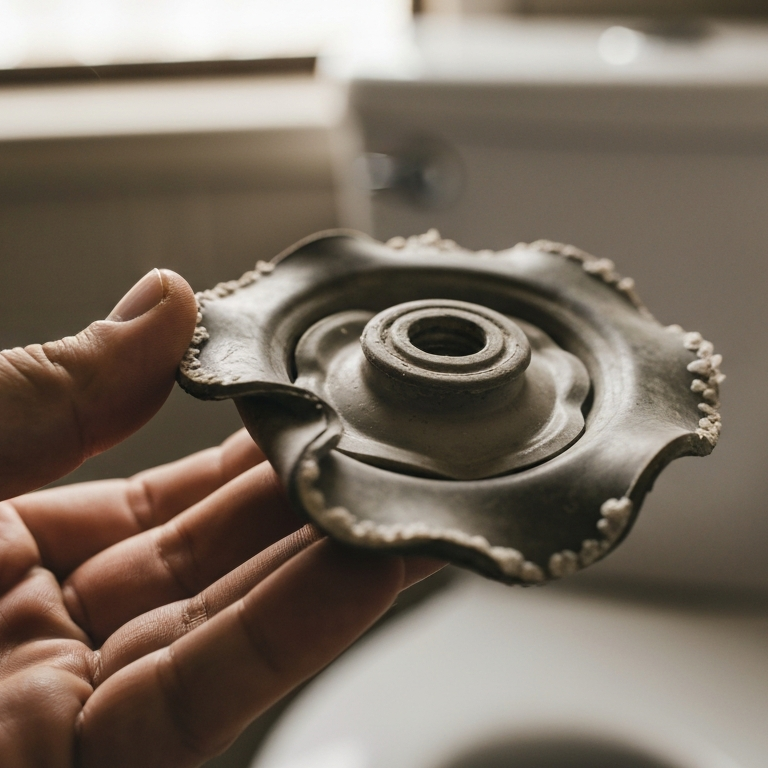
What Happens Inside the Tank When You Flush
Pull the lid off your toilet tank and set it somewhere safe. Flush and watch.
When you press the handle, a chain lifts a rubber disc — the flapper — off a hole at the bottom of the tank called the flush valve. Water rushes into the bowl, the flapper drops back down and seals the hole, and the tank starts refilling. A float rides up with the rising water. When the float reaches a set height, it shuts off the fill valve and everything stops.
That's the whole system. Flapper, chain, float, fill valve. When your toilet keeps running, one of them isn't doing its job
| Cause | What you'll hear/see | DIY fix? |
|---|---|---|
| Flapper won't seal | Constant hissing; water visible running in bowl | Usually yes — $5–15 flapper |
| Chain too short/tangled | Toilet never fully stops after flushing | Yes — adjust or replace chain |
| Float set too high | Water drains into overflow tube continuously | Yes — adjust float |
| Fill valve failure | Running persists after float and flapper checks | Maybe — fill valve kit $15–25 |
The Flapper: Most Common Culprit
The flapper is a rubber disc about the size of a drink coaster. Its only job is to seal the flush valve seat at the bottom of the tank and hold water until the next flush. Simple as that sounds, it's the part that fails most often.
Rubber degrades. A flapper in an older toilet may be seven, ten, fifteen years old — stiff and slightly warped from years of sitting in chlorinated water. In areas with hard water, mineral scale deposits on the valve seat beneath the flapper, creating a rough surface the rubber can't seal against. Even a gap the width of a business card lets water trickle through constantly.
You can test the flapper without touching anything. Add a few drops of food coloring to the tank water. Wait 15 minutes without flushing. If color appears in the bowl, the flapper isn't sealing.
Shut off the supply valve behind the toilet — the small oval knob on the wall — flush to drain the tank, unhook the old flapper from its pegs, and take it to the hardware store to match the size. Slip the new one in, reconnect the chain, and turn the water back on. Total time: 20–30 minutes. Total cost: under $15.
One thing to check before you call it done: run your finger around the flush valve seat — the ring the flapper sits against. If it feels rough or has visible scale buildup, that rough surface will eat through the new flapper almost as fast as the old one failed. A little scrubbing with white vinegar and a soft brush can smooth it out enough to hold a proper seal.
The Chain: Easy to Overlook, Easy to Fix
The chain connects the flush handle arm to the flapper. Its length matters more than most people expect.
Too short, and the flapper can't drop all the way back onto the valve seat after you flush. It sits slightly open and water trickles through the gap constantly. You'll often notice the toilet runs for an unusually long time after every flush, not just now and then.
Too long, and the chain can loop under the flapper when it closes — holding it up just enough to create a slow leak. This shows up a lot in older toilets where someone replaced the chain at some point with one that was longer than necessary.
The right chain length has about a half-inch of slack when the flapper is seated. Enough that the handle can lift it fully, but not so much that extra chain bunches up underneath. Lift the lid, flush, and watch where the chain goes when the flapper closes. It's obvious once you see it.
The Float: When Water Level Is Set Too High
If the flapper and chain are fine, look at where the water level sits in the tank.
Every toilet has an overflow tube — a tall plastic pipe standing up in the center of the tank. Its job is to drain excess water into the bowl before the tank overflows. If the float is set too high, the fill valve keeps adding water past the right level, water spills into the overflow tube, and the fill valve never shuts off because the tank never quite reaches its trigger point. You'll hear the toilet running constantly, not on-and-off. Look at the overflow tube — if water is trickling over the edge of it, that's your answer.
Lower the float so the fill valve shuts off with the water level about one inch below the top of the overflow tube. On modern toilets, there's usually a small adjustment screw or a clip you slide along a rod. On older ball-float toilets — the kind with a large plastic or copper ball on an arm — bend the arm slightly downward to lower the shutoff point.
The Fill Valve: When Everything Else Looks Fine
You have checked the flapper, the chain has proper slack, and the water level is right — but the toilet still runs. That's the fill valve.
The fill valve is the tower-shaped mechanism on the left side of the tank. It's controlled by the float and it's what actually opens and closes to let water in. Inside the cap is a small rubber seal — sometimes called a diaphragm — that can wear out, crack, or collect debris that stops it from closing fully.
Hard water makes fill valve failure more likely. The same mineral scale that builds up in pipes and on showerheads can work its way into the fill valve seat and block a clean shutoff. A high-pitched whistle alongside the running sound usually means the diaphragm is partially blocked.
Some fill valves can be cleaned — the cap pops off with a quarter turn and you can flush debris out under running water. But a fill valve more than seven to ten years old is generally worth replacing. The Fluidmaster 400A fits almost every standard toilet and the swap takes about thirty minutes.
Ghost Flushing: The Toilet That Runs on Its Own, Hours Apart
Ghost flushing is different from a constantly running toilet. You don't hear it all the time — but every two or three hours, the tank briefly refills as if someone just flushed. Nobody did. The tank is slowly losing water.
Same cause as a slow flapper leak, just slower. Water seeps past the flapper over an hour or two until the tank level drops far enough to trigger the fill valve. The tank refills, shuts off, and the cycle starts over. And on your water meter, ghost flushing looks identical to a toilet running constantly — it just spreads the waste out.
Think of it like a dripping kitchen faucet. A faucet dripping once per second wastes over 3,000 gallons per year. A toilet ghost-flushing twice an hour is moving far more water than that.
If you are chasing a ghost-flushing toilet, start with the food coloring test. The flapper is responsible in almost every case.
When the DIY Fix Doesn't Hold
Sometimes you replace the flapper, adjust the float, swap in a new fill valve — and the toilet still runs. Or it stops for two weeks and starts again. That pattern usually means one of two things.
First: the flush valve seat is damaged. If the plastic or porcelain ring the flapper seats against is cracked or eroded unevenly, no rubber disc will seal against it reliably. Replacing the flush valve is more involved — it requires nearly draining and partially lifting the toilet — but it's not uncommon in older homes. A toilet from the 1970s or 1980s may have a flush valve that's simply worn past the point where any replacement part can hold a seal.
Second: the toilet is reaching the end of its life. An older toilet,, repaired multiple time,s, oftesuffers cascading failures. At some point, the economics favor a full replacement — newer toilets use 1.28 gallons per flush compared to the 3.5 to 7 gallons common in pre-1994 models. The water savings alone can pay for the new toilet within a few years.
A licensed plumber can tell you within minutes whether a repair is likely to hold or whether the toilet's history makes replacement the smarter call.
Frequently Asked Questions
It depends on the severity. A slow flapper leak might waste 200–300 gallons per month. A float set too high can waste 1,000–3,000 gallons. A badly degraded flapper or failed fill valve can push that to 6,000–7,000 gallons per month — roughly double the average household's total water use. On municipal water in eastern PA, that can add $30–70 or more to a monthly bill.
Most running toilets — flapper replacement, chain adjustment, float adjustment — are real DIY repairs. Parts run $5–25 and the tools are minimal. A plumber earns their call when there are multiple failures at once, the flush valve seat is damaged, or the question is whether to repair or replace the whole toilet.
Jiggling the handle physically repositions the flapper onto the valve seat through the chain. If that fixes it temporarily, the chain is almost certainly the wrong length — or the flapper is worn and only seals under a certain amount of pressure. Replace the flapper first. That solves the jiggle-the-handle problem in most cases.
Thirty seconds is on the long end of normal fill time, but not unusual for an older toilet with a fill valve that's starting to slow down. If it used to be faster and has gradually gotten slower, the fill valve diaphragm is likely partially blocked with scale. Cleaning or replacing the fill valve usually brings the refill time back to normal.
Hard water. Most of the water supply in Berks and Montgomery Counties runs between 150 and 300 parts per million of dissolved minerals — calcium and magnesium primarily. Those minerals deposit on every rubber and plastic surface they touch. A flapper in a hard-water home can show scale buildup within two to three years. Cleaning it with a vinegar-soaked cloth extends its life, but once the rubber has hardened or warped, replacement is the only real fix.
In rare cases, yes. Excessively high water pressure — above 80 PSI — can cause a fill valve to fail prematurely and may prevent a marginal flapper from sealing consistently. If you've replaced components multiple times and the problem keeps coming back, have a plumber check the incoming water pressure with a gauge. A pressure-reducing valve handles homes with chronically high pressure.
A running toilet doesn't look like an emergency — no water on the floor, no visible damage. But the meter doesn't care. Check the flapper first, then the chain, then the float, then the fill valve. Start cheap and simple. Most of the time, a $10 flapper and half an hour is all it takes.
