
You go down to the basement to grab something, and the water heater grabs your attention first. There is a sound — a low rumbling that shifts into something that sounds like popcorn in a microwave. Irregular. Intermittent. Louder when it's heating. You've never heard it do that before, or maybe you have, and it's been getting worse over the past few months.
That noise is almost always diagnostic. It's telling you something specific about what's going on inside the tank. The less reassuring part is that what it's usually telling you is that the problem has already been building for a while — and how you respond now determines whether you're looking at a $200 service visit or a $1,500 water heater replacement.
That rumbling, popping, crackling sound is almost always sediment. Here's what's actually happening inside the tank, why it matters, and when you're at the point where flushing won't fix it anymore.
Quick Reference: Water Heater Noises, Causes, and Urgency
| Sound | Most Likely Cause | Urgency |
|---|---|---|
| Popping or crackling | Sediment on the tank floor (gas heaters) | Moderate — act within weeks |
| Rumbling or kettling | Sediment buildup, heating water underneath | Moderate — schedule service |
| Crackling or sizzling (electric) | Scale on lower heating element | Moderate — flush or replace element |
| Banging or "water hammer" | Thermal expansion; loose pipes | Moderate — check expansion tank |
| High-pitched whine or whistle | Partially closed valve; debris in valve | Low to moderate — check valves |
| Popping near relief valve | Pressure-relief valve activating | High — inspect immediately |
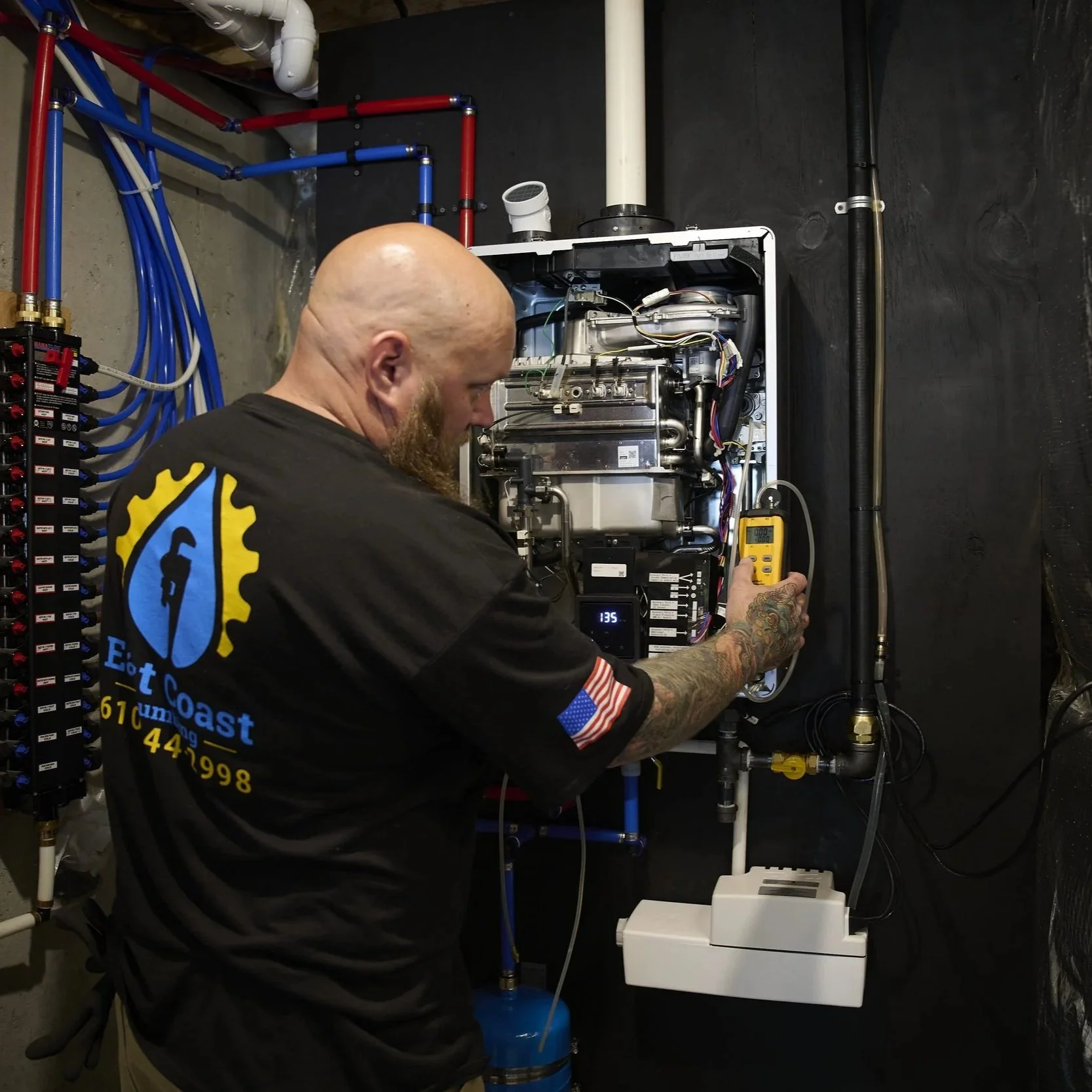
What's Actually Happening Inside the Tank
Your water supply isn't pure water. It carries dissolved minerals — primarily calcium and magnesium carbonate. They're suspended in the water invisibly while the water is cold. But heat changes that chemistry. When the water reaches temperature, those dissolved minerals precipitate out of solution and settle. Minerals accumulate on the hottest surface in the system: the floor of the tank, right above the burner.
That layer of sediment isn't just sitting there passively. When the burner fires to heat a new batch of water, the sediment traps pockets of water against the tank floor. The burner drives heat up through the steel, through the sediment layer, into those trapped water pockets — and those pockets superheat. Then they vaporize and burst through the sediment.
That bursting is the popping you're hearing. Think of it like boiling water under a wet towel draped over the bottom of a pot. The water underneath builds steam, and it pops through wherever it can find a gap. Every cycle of the burner produces those mini-eruptions.
Why Hard Water Regions See This Faster
Not every water heater sediments at the same rate. The speed depends almost entirely on water hardness — specifically, the concentration of calcium and magnesium in your supply.
In southeastern Pennsylvania, water hardness varies significantly by county. Berks and Montgomery County water is among the harder supplies in the state, pulling from limestone-heavy aquifers that leave high mineral loads. A water heater in a hard-water area can accumulate a meaningful sediment layer in two to three years. A tank in a soft-water area might take six or seven years to show the same symptoms.
That sediment layer also acts as insulation. The harder the water, the faster the scale builds — and the faster that layer starts reducing the heater's efficiency. The burner runs longer to get the water to temperature because it's heating through an insulating barrier instead of direct contact with the tank floor. Your gas bill goes up. The tank works harder. The same problem that causes the noise is also quietly shortening the heater's life.
What the Different Sounds Actually Mean
Popping is sediment, almost certainly. But water heaters make a range of sounds, and they don't all mean the same thing.
Rumbling or kettling is a more advanced version of the same problem. At this stage, the sediment layer is thick enough that large water pockets are forming and collapsing. The sound is lower, more sustained. This usually means the sediment has been accumulating for years, not months.
Sizzling or crackling, particularly on an electric water heater, points to scale buildup on the lower heating element rather than the tank floor. Electric elements heat the water directly rather than through a burner below — so mineral scale coats the element itself. The sound is similar but higher-pitched, and it's often accompanied by the heater taking longer to recover after a full draw.
Banging or a sharp knock can be thermal expansion rather than sediment. Water expands as it heats — roughly 2 percent in volume. If the system doesn't have a working thermal expansion tank, that expanding water has nowhere to go. It pushes back against a closed system and the pipes knock. This is separate from sediment and worth checking on its own.
A sound coming from near the pressure-relief valve — a hissing or gurgling at the valve itself — is different from all of the above and warrants attention faster. That valve opens when pressure inside the tank exceeds safe limits. If it's activating frequently, something is wrong with pressure regulation, not just sediment.
What Happens If You Ignore the Noise
Sediment damage follows a predictable arc. The longer it goes unaddressed, the further along that arc you get.
In the early stages — thin sediment layer, popping just starting — a professional tank flush can clear the buildup and restore most of the heater's efficiency. The sound goes away. The heater returns to normal recovery times.
In the middle stages, the sediment layer has hardened. Calcium carbonate in particular doesn't stay loose — it calcifies into a brittle, cement-like crust. Flushing may break some of it loose at this stage, but it won't clear the floor completely. The heater operates better but not normally.
In the late stages, the hardened sediment is essentially a permanent feature of the tank. The burner overheat cycles have weakened the steel floor. Hot spots develop. Rusty-colored water means the internal anode rod has been depleted and the tank itself is corroding. At this stage, you're replacing the heater, not servicing it. Flushing a tank that's already failed internally doesn't accomplish anything except making a mess.
The sediment process is like the inside of a teakettle that's never been descaled. Left long enough, the buildup isn't just coating — it becomes structural. By the time the outside of the kettle looks fine, the inside has an entirely different geometry.
When a Flush Will Help and When It's Too Late
A sediment flush involves opening the drain valve at the base of the tank and purging the accumulated sediment out through a hose. It works best when:
The tank is less than eight to ten years old. The tank has been flushed before — or at least has not been neglected for the heater's entire life. The sediment is still loose rather than hardened. You're not already seeing rust in your hot water.
If you've bought a home with an older water heater and have no history on it, and it's already making rumbling sounds, a professional should assess the tank before attempting a flush. Disturbing heavily calcified sediment in a tank with a weakened floor can accelerate failure — or trigger a drain valve that hasn't been opened in years to seize or start leaking because the seal has dry-rotted.
A check worth adding to the service visit: have the anode rod inspected. The anode rod is the sacrificial magnesium or aluminum rod that corrodes so the tank doesn't. In a hard-water home, anode rods deplete faster than average. A new rod at the time of the flush can meaningfully extend the tank's remaining life.
When the Noise Is Something Other Than Sediment
If the tank is less than three years old, sediment is unlikely to be severe enough to produce the popping you're hearing. At that age, a few other causes are worth checking.
Thermal expansion. If the expansion tank is undersized, absent, or has failed (the bladder inside can rupture), expanding water has nowhere to go. You'll hear banging in the pipes or around the heater when it finishes a heating cycle.
A loose dip tube. The dip tube routes incoming cold water to the bottom of the tank so it doesn't mix with the hot water at the top. If the tube breaks or disconnects, cold water enters near the top and the thermostat reads it as hot water — the heater cycles erratically, and you may hear sounds that resemble sediment without sediment being the cause.
A failing anode rod. A depleted anode rod doesn't directly make noise, but its absence accelerates internal corrosion. Some homeowners report a sulfur smell or intermittent sounds alongside the visual sign of rust-tinged hot water — that combination almost always means the anode has failed and the tank is corroding from the inside.
Inconsistent Water Temperature
A heater that swings between scalding and lukewarm, or that takes noticeably longer to recover after a draw, is usually showing a failing heating element (electric) or a thermostat drifting off its setpoint. On gas units, burner issues or a weakening thermocouple cause similar symptoms.
Inconsistent temperature rarely arrives as the first sign of trouble. It usually shows up alongside something else — shorter hot water duration, longer recovery times, or noise during the heating cycle. When it shows up alone on a newer unit, it points to a component failure worth repairing. On a tank already showing two or three other symptoms, it's one more data point toward replacement.
Frequently Asked Questions
In areas with hard water, a noticeable sediment layer can form in two to three years. In moderate-hardness water, it typically takes four to five years before it affects performance. Most plumbers recommend flushing a gas water heater every two to three years in high-hardness regions to prevent the buildup from hardening.
Yes. The sediment layer acts as an insulating barrier between the burner and the water. The burner has to run longer to achieve the same temperature. Studies on tank-type heaters have estimated that a half-inch of sediment increases energy consumption by 25 to 35 percent — which shows up on your gas bill before you notice it audibly.
If the heater is relatively new — under eight years old — and you have maintained it, yes, with care. If the heater is older or has never been flushed, it's better to have a plumber do it. Older drain valves frequently seize or develop slow leaks when opened for the first time in years, and disturbing heavily calcified sediment in a tank with an aging floor can accelerate problems rather than fix them.
If the tank is more than 12 years old, is making persistent rumbling or popping sounds, and you are also seeing rusty water or inconsistent temperatures, replacement is typically more cost-effective than service. Tank-type water heaters have an average lifespan of 10 to 12 years. At that age, the sediment is likely hardened, the anode rod is depleted, and the tank floor has likely sustained heat damage from years of inefficient combustion.
In most cases, no. Sediment noise is an efficiency and longevity problem, not a safety emergency. The exception is if the noise is coming from the pressure-relief valve or if you notice the relief valve's discharge pipe dripping water — that warrants prompt attention because it means pressure regulation may be failing.
A new heater making popping sounds typically points to exceptionally hard water — enough mineral content that sediment is forming faster than expected — or a manufacturing issue with the tank's dip tube. If you're in a hard-water area, ask your plumber about a whole-house water softener or at least a pre-filter ahead of the heater. It can significantly extend the useful life of the unit.
That popping sound won't go away on its own. Caught at the right stage, it's often a service call rather than a replacement — the difference between draining a tank that still has years of life left and discovering it too late.
